Virginia Buttonweed in Houston & Sugar Land Lawns (And How to Actually Control It)
Virginia Buttonweed in Houston & Sugar Land Lawns (And How to Actually Control It)
f you have a Houston-area lawn and feel like Virginia buttonweed keeps coming back no matter what you spray, you’re not alone. I see this weed every year across Sugar Land, Missouri City, Katy, Richmond, and southwest Houston, especially in St. Augustine lawns.
Virginia buttonweed is one of the most misunderstood — and mistreated — lawn weeds in our area. The good news is: it can be controlled if you understand how it spreads and what actually works.
I’ll walk you through it step by step.
What Is Virginia Buttonweed?
Virginia buttonweed (VBW) is a warm-season perennial weed that thrives in Houston’s heat, humidity, and clay soils. It stays low to the ground, has small opposite leaves, and produces tiny white flowers.
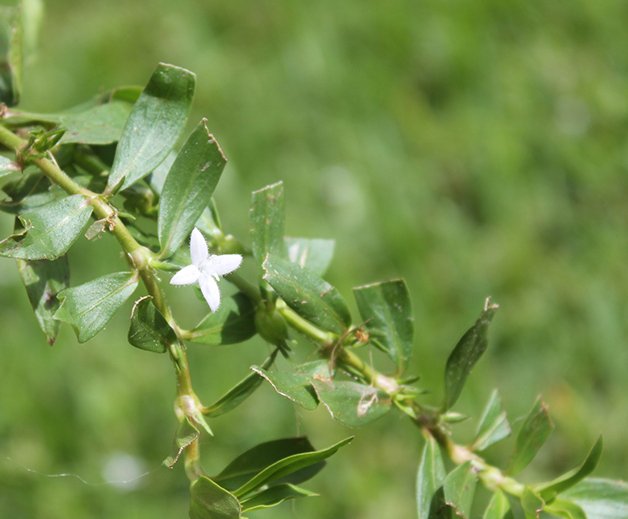
Close-up photo of Virginia buttonweed in a Houston lawn, showing low-growing stems, opposite green leaves, and a small white flower — a common invasive weed in Sugar Land and Houston St. Augustine grass.
The reason homeowners hate it so much?
It doesn’t behave like normal weeds.
📲 Text photos to: 281-208-4400
Why Virginia Buttonweed Spreads So Fast in Houston Lawns
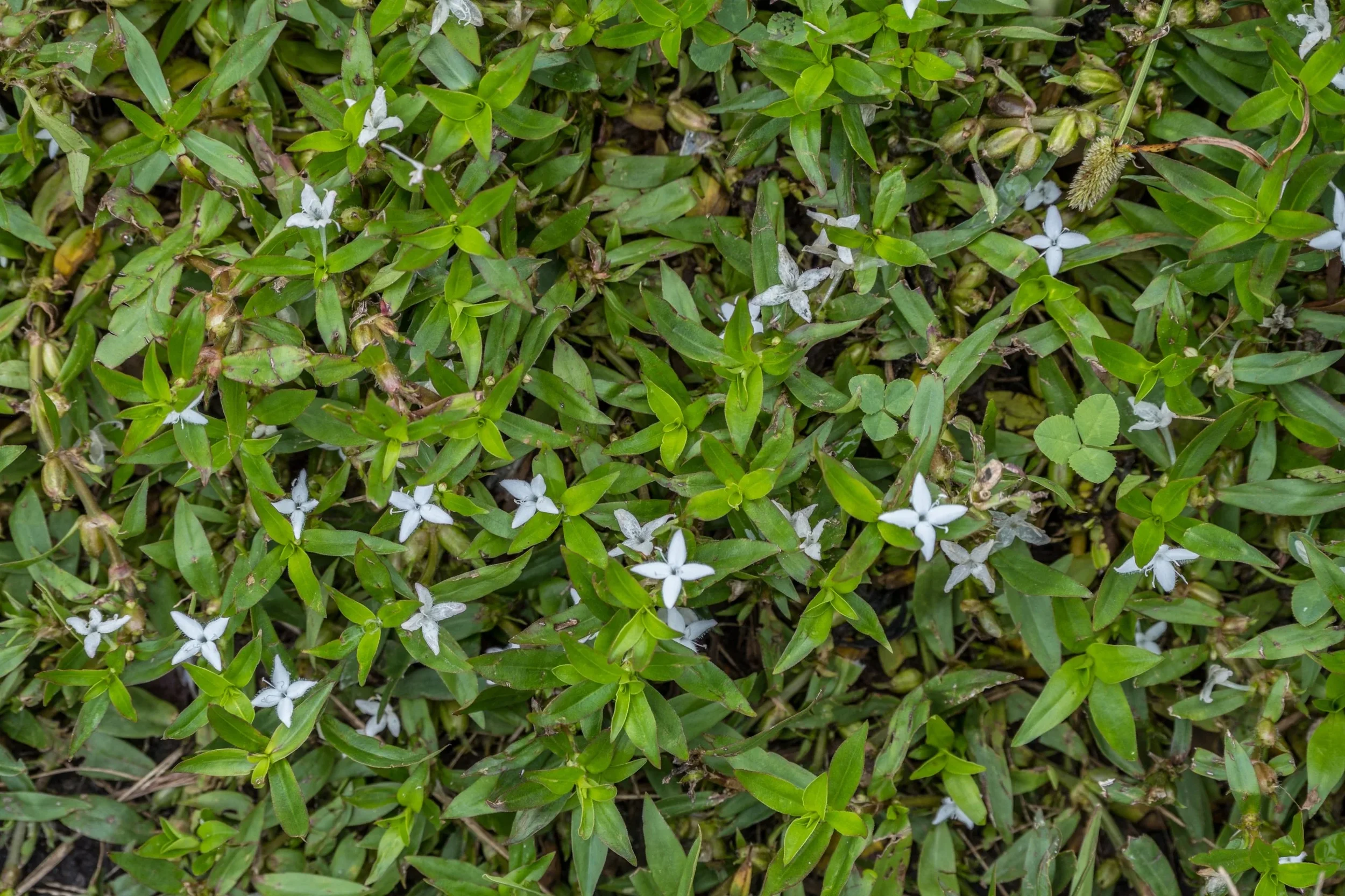
Heavy Virginia buttonweed infestation in a Houston and Sugar Land lawn, showing runners and white flowers spreading through turfgrass.
Here’s the key thing most people get wrong:
Virginia buttonweed spreads mainly by above-ground runners (called stolons), not by mower clippings rooting.
When you mow:
Those runners get chopped into pieces
Each piece can re-establish and spread
The weed slowly takes over thin or stressed turf
That’s why frequent mowing or scalping often makes it look worse, not better.
Why Sedge Killers and Weekly Spraying Don’t Work
This is where I see a lot of frustration.
❌ Sedge products won’t touch Virginia buttonweed
They’re great for nutsedge, but VBW shrugs them off completely.
❌ Weekly spraying causes more harm than good
Repeated spraying:
Stresses St. Augustine and Bermuda
Weakens turf recovery
Still doesn’t solve the problem
Virginia buttonweed is not a one-spray weed. It takes patience and the right product.
The Only Product I Trust for Virginia Buttonweed
For Houston and Sugar Land lawns, the most reliable control I’ve found is:
Celsius WG
✔ Safe for St. Augustine and Bermuda
✔ Works in warm weather
✔ Targets buttonweed without nuking the lawn
This is the same product we use professionally when VBW shows up in client yards.
How to Spray Virginia Buttonweed the Right Way
1. Spot spray — don’t blanket
You’re treating the weed, not the whole lawn.
2. Always use a spreader-sticker (non-ionic surfactant)
This matters more than people realize.
A spreader-sticker like this one from Liquid Harvest
Helps the spray spread across the leaf
Helps it stick long enough to work
Improves results without increasing chemical
3. Expect multiple treatments
Virginia buttonweed control is a marathon, not a sprint.
Plan on:
2–3 treatments
Proper spacing between sprays
Gradual die-back, not instant results
If it disappears overnight, something went wrong.
What University Research Shows (And How It Applies in Houston)
A lot of what we see in Sugar Land and Houston lawns lines up with research from LSU AgCenter, University of Georgia, and Clemson — but research only helps if it works in real Gulf Coast conditions.
Here’s what consistently shows up in the studies and in local lawns when it comes to Virginia buttonweed control.
Best Products for Virginia Buttonweed (Research-Backed)
Celsius WG — The Most Reliable Option
This is still the most dependable product I’ve found for our area.
Consistently strong control when used correctly
Safe for St. Augustine and Bermuda (also Centipede and Zoysia)
Can be applied even when temperatures exceed 85°F
Requires repeat applications, usually 2 treatments spaced 4–6 weeks apart
Celsius is the product I lean on most during Houston summers, when other herbicides become risky.
MSM (metsulfuron) Products
Budget-friendly, but slower.
Fair to good control
Requires multiple applications
Safe in hot weather
Very economical for large areas
MSM works best as a long-term control tool, not a quick fix.
3-Way / 4-Way Herbicides
(2,4-D + dicamba + mecoprop ± carfentrazone)
Suppress new growth and kill seedlings
Only safe below 85°F
Can severely damage St. Augustine and Centipede if misused
These are temperature-sensitive tools, not year-round solutions for Houston lawns.
The Winning Strategy (Research + Houston Reality)
Spring (April–May) — Best Time to Start
This is when Virginia buttonweed breaks dormancy.
Plants are tender with new growth
You weaken both runners and the main plant
This is the best window for long-term control
Use:
👉 Always add a surfactant
(About 1–2 teaspoons per gallon)
Summer (June–August)
Houston heat changes the rules.
Spot spray only
Use Celsius or MSM
Spray early morning or evening
Hand-pull where possible
Expect 2–3 total applications over the season
Fall (September–November) — Often Missed, Very Effective
This is one of the most overlooked control windows.
As highs drop below ~80°F, switch products
Always add surfactant
Fall treatments weaken buttonweed going into winter and pay off the following year.
Why a Surfactant Is Non-Negotiable Here
This matters more than most people realize.
Houston-area water is very hard, and Virginia buttonweed leaves are waxy.
Without a non-ionic surfactant:
Spray beads up
Rolls off the leaf
Ends up in the soil
Control drops 30–50%
Use:
Bonide Turbo Spreader Sticker
Hi-Yield Spreader Sticker
Stick to the label rate — more is not better.
What Doesn’t Work (And Why)
❌ Sedge killers — wrong chemistry
❌ Weed-and-feed products — poor timing, poor results
❌ Weekly spraying — stresses turf without solving the problem
❌ Pre-emergents — buttonweed spreads by runners, not just seed
❌ Glyphosate — unless you’re willing to kill and re-sod
Reality Check for Sugar Land & Houston Lawns
Virginia buttonweed control takes time.
You’re fighting:
Stolons that root at every node
An extensive underground system
What to expect:
Year 1: Knock it back and stop spread
Year 2: Major reduction
Year 3: Maintenance spot treatments
This is a marathon, not a sprint — but it is beatable.
Common Houston Mistakes That Keep VBW Alive
I see these all the time:
Spraying sedge killers over and over
Blanket spraying instead of spot treating
Over-spraying and stressing St. Augustine
Mowing too low during active growth
Expecting one application to fix it
Buttonweed wins when turf is stressed. Healthy grass is part of the solution.
When to Treat Virginia Buttonweed in Sugar Land & Houston
Best results come when:
The weed is actively growing
The lawn is not under heat or drought stress
You avoid spraying during extreme temperatures
If you’re unsure about timing, that’s where photos help.
Need Help Identifying or Timing It?
If you’re in Sugar Land, Houston, or surrounding areas, you can send photos and I’ll tell you exactly what you’re dealing with and how I’d handle it.
📲 Text photos to: 281-208-4400
That’s often the fastest way to stop guessing and start fixing it.
Final Word from Garden Guy
📲 Text photos to: 281-208-4400
Virginia buttonweed is frustrating — but it’s beatable.
The keys are:
The right product
Spot spraying
Patience
If you stay precise and don’t rush it, this weed will lose. If you need my help click here for free advice.
Common Questions I Get About Virginia Buttonweed
Q: Can I just use Roundup and re-sod the area? A: If you have a massive infestation in one area with almost no grass left, yes - sometimes starting over is the best option. Use 3% glyphosate on that section, wait 2 weeks, then re-sod. But for scattered buttonweed throughout the lawn, selective herbicides are your answer.
Q: Will weed-and-feed products work? A: No. Randy Lemmon has been saying this for years, and I agree 100%. Weed-and-feed rarely works on tough weeds like Virginia buttonweed. You need targeted post-emergent herbicides.
Q: Why do I need surfactant? The herbicide label doesn't mention it. A: Gulf Coast water is extremely hard - full of minerals. Without surfactant, herbicides bead up on the waxy buttonweed leaves and roll off. In university studies, herbicides without surfactant showed 30-50% LESS effectiveness. It's the difference between success and failure.
Q: Can I spray my whole lawn to prevent buttonweed? A: Don't blanket spray. It stresses your grass unnecessarily and wastes product. Spot-treat where you see buttonweed, and focus on keeping your grass healthy to outcompete weeds.
Q: My neighbor has buttonweed. Will it just keep coming back from their yard? A: Yes, unfortunately. Buttonweed seeds can blow in, and lawn care crews can spread it on mower blades. Keep your lawn thick and healthy to resist new invasions, and stay on top of spot treatments.
FAQ: Does Crabgrass Killer Work on Virginia Buttonweed?
Short answer: Not reliably.
Products labeled as crabgrass killers (including Agralawn and similar brands) are formulated to control annual grassy weeds, not broadleaf perennial weeds like Virginia buttonweed.
In some cases, homeowners may see temporary wilting or discoloration after spraying, but that is not true control. The buttonweed usually recovers and continues spreading by runners.
University turf research and real-world results in Houston and Sugar Land lawns consistently show that crabgrass killers do not provide dependable, long-term control of Virginia buttonweed.
For reliable results, use:
Celsius WG
Spot spraying only
A non-ionic surfactant
Repeat applications as needed
That approach targets the weed’s biology instead of just slowing it down.
The Garden Guy Approach
Look, I've been doing this in Fort Bend County for over 30 years. After the 2021 freeze, I saw every lawn problem imaginable. Virginia buttonweed tried to take over everywhere - from brand-new sod in Sienna to established St. Augustine in Telfair.
The lawns that recovered best were the ones where homeowners:
Started control early (spring)
Used the right products at the right time
ALWAYS added surfactant
Stayed patient and consistent
This isn't rocket science, but it does take a plan and commitment.
Need Help With Your Specific Lawn?
Every lawn is different. If you're dealing with Virginia buttonweed and want personalized advice for your situation, I'm happy to help.
Here's how it works:
Send photos of your lawn and describe the problem at askgardenguy.com
I'll give you free expert advice on exactly what to do
That's it. No charge for the advice.
Final Thoughts
Virginia buttonweed is tough, but it's not unbeatable. With the right products, proper timing, and realistic expectations, you CAN get your Sugar Land lawn back.
The key is starting NOW - not waiting until the weed takes over half your yard.
Your action plan:
Order your supplies (herbicides + surfactant + sprayer)
Watch for buttonweed to start growing (March-April)
Start spot treatments immediately
Stay consistent throughout the season
Switch to cool-season herbicides in fall
And remember: ALWAYS use surfactant. I can't emphasize this enough.
Good luck with your lawn. You've got this.
— Todd Farber
Garden Guy Inc.
Serving Fort Bend County since 1991
