Eagleston Holly: The Best Backyard Privacy Tree for Houston | Garden Guy
The one tree we plant most for Houston backyard privacy
If you want a lush, evergreen screen that blocks the neighbors year-round and barely asks for a thing, meet Eagleston Holly — low-maintenance, heat- and freeze-tough, and built for the Gulf Coast. Here's how to plant it, how far apart to space it, and the best alternatives if you want a different look.
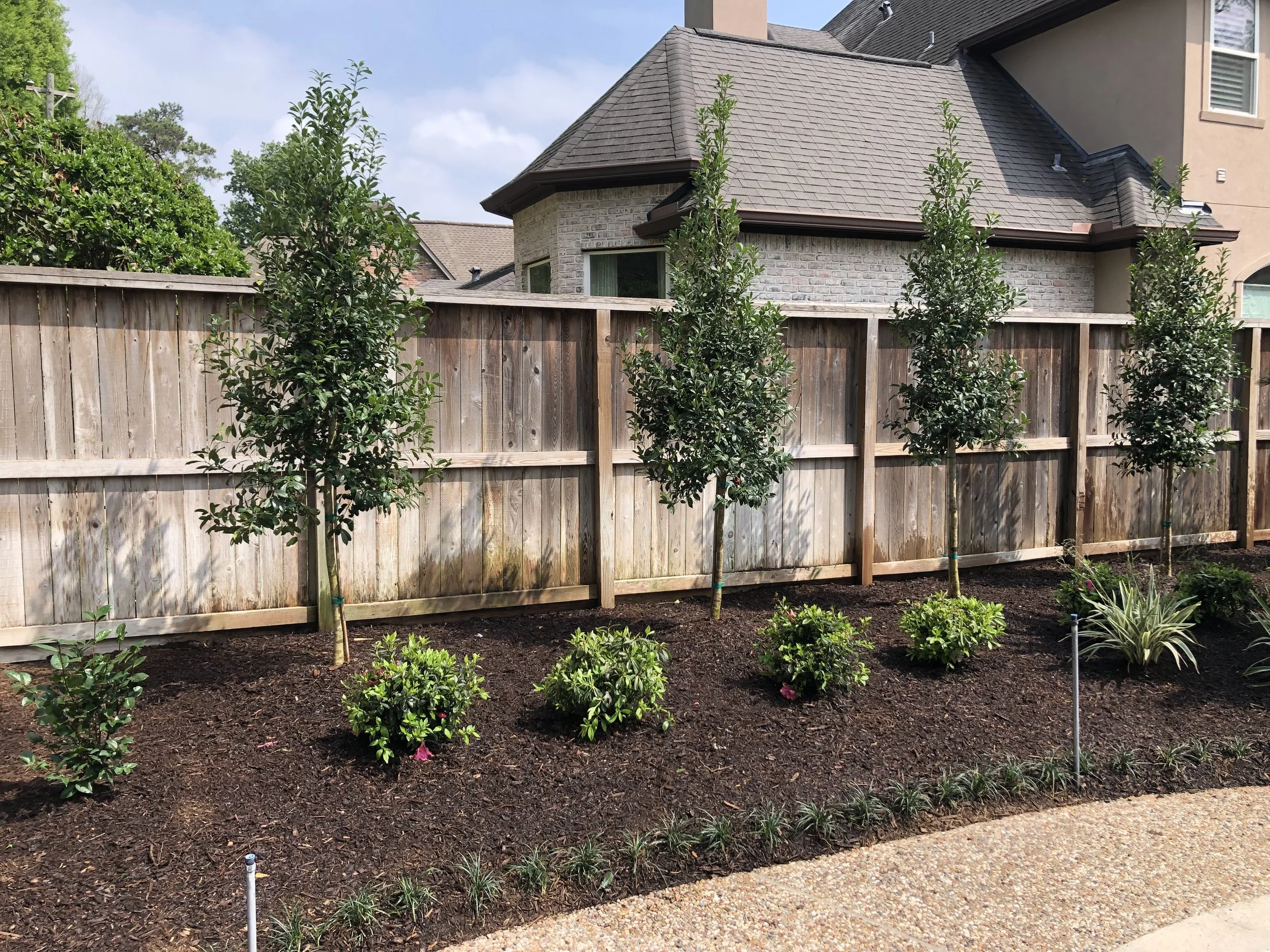
Eagleston Holly forms a dense, evergreen privacy screen — even through Houston winters. This is Garden Guy’s work.
Eagleston Holly at a glance
Ilex x attenuata 'Eagleston' — a Dahoon × American Holly hybridWhy Eagleston Holly is our go-to
It brings together the best of the native Dahoon and American Holly: a tall, dense, upright form that holds its screen even when it turns cold.
Year-round privacy
Evergreen leaves mean your screen never disappears in winter.
Tall but narrow
20–25 ft of height in just 10–15 ft of width — great for real backyards.
Heat & freeze tough
Shrugs off Houston summers and the occasional hard freeze.
Wildlife friendly
Fall berries pull in songbirds without any work from you.
Low maintenance
Little to no pruning — let the natural pyramid fill in.
Drought tolerant
Water deeply while young, then it mostly fends for itself.
How far apart — and how many you need
The most common privacy-screen mistake is spacing. Too far apart and you wait years for a gappy hedge; too tight and they crowd and hold humidity.
| Your fence run | 6 ft apart (solid screen) | 8 ft apart (relaxed) |
|---|---|---|
| 20 ft | 5 trees | 4 trees |
| 30 ft | 6 trees | 5 trees |
| 40 ft | 8 trees | 6 trees |
| 50 ft | 10 trees | 8 trees |
| 60 ft | 11 trees | 9 trees |
| 80 ft | 15 trees | 11 trees |
| 100 ft | 18 trees | 14 trees |
The math: (fence length ÷ spacing) + 1, rounded up. The “+1” covers the far end of the row.
Planting & care
Three ways to use it
Single specimen
One tree in a back corner blocks the worst sightline and doubles as a focal point.
Privacy hedge
A staggered row reads as a seamless living wall — the classic full-fence screen.
Layered screen
Pair with Dwarf Yaupon or Texas Sage in front for depth and a softer, designed look.
Prefer a different look? Strong alternatives
Eagleston is our all-round favorite, but the right tree depends on your space, how fast you need coverage, and the look you're after.
| Tree | Mature size | Speed | Best for |
|---|---|---|---|
| Eagleston Holly | 20–25 × 10–15 ft | Mod–Fast | Our #1 all-round pick |
| Nellie R. Stevens Holly | 15–25 × 8–12 ft | Fast | Dense, formal, pyramidal |
| Savannah Holly | 20–30 × 8–12 ft | Moderate | Taller, upright, berry-heavy |
| Southern Wax Myrtle | 15–20 × 15–20 ft | Fast | Native, casual, quick fill |
| Yaupon Holly (upright) | 15–20 × 8–12 ft | Moderate | Native, drought-tough |
| 'Little Gem' Magnolia | 20–25 × 8–12 ft | Slow–Mod | Evergreen with white blooms |
Weighing two of these? Read our head-to-head: Eagleston Holly vs. Nellie R. Stevens.
Get Todd's full Sugar Land Privacy Trees Guide
Enter your email and we'll send the complete printable guide — everything you need to pick the right tree and get it right the first time:
- Eagleston Holly vs. Nellie R. Stevens, compared head to head
- How to choose for your soil, space & privacy goals
- Step-by-step planting & watering for Houston clay
- The privacy trees Todd will NOT plant here — and why
Eagleston Holly FAQ
How fast does Eagleston Holly grow?
How far apart should I plant them for privacy?
Is Eagleston Holly safe around pets?
How much water does it need?
Does it lose its leaves in winter?
What's the best time to plant in Houston?
Not sure it's right for your yard?
Send Todd a photo and your question — he reads every message himself and writes back within 24 hours. Free.
