How Long to Water Your Lawn in a Houston Summer
How Long Should You Water Your Lawn in a Houston Summer?
The exact settings we use at our own house — and how to know when your yard actually needs a drink.
A reader wrote in this week a little worried she wasn’t watering enough. She’d been running her sprinklers just three minutes a station, bumped it up to six, and wanted to know what “enough” really looks like when it’s this hot out.
It’s one of the most common questions we get all summer long here on the Gulf Coast — so let’s walk through it the same way we’d explain it to a neighbor over the fence.
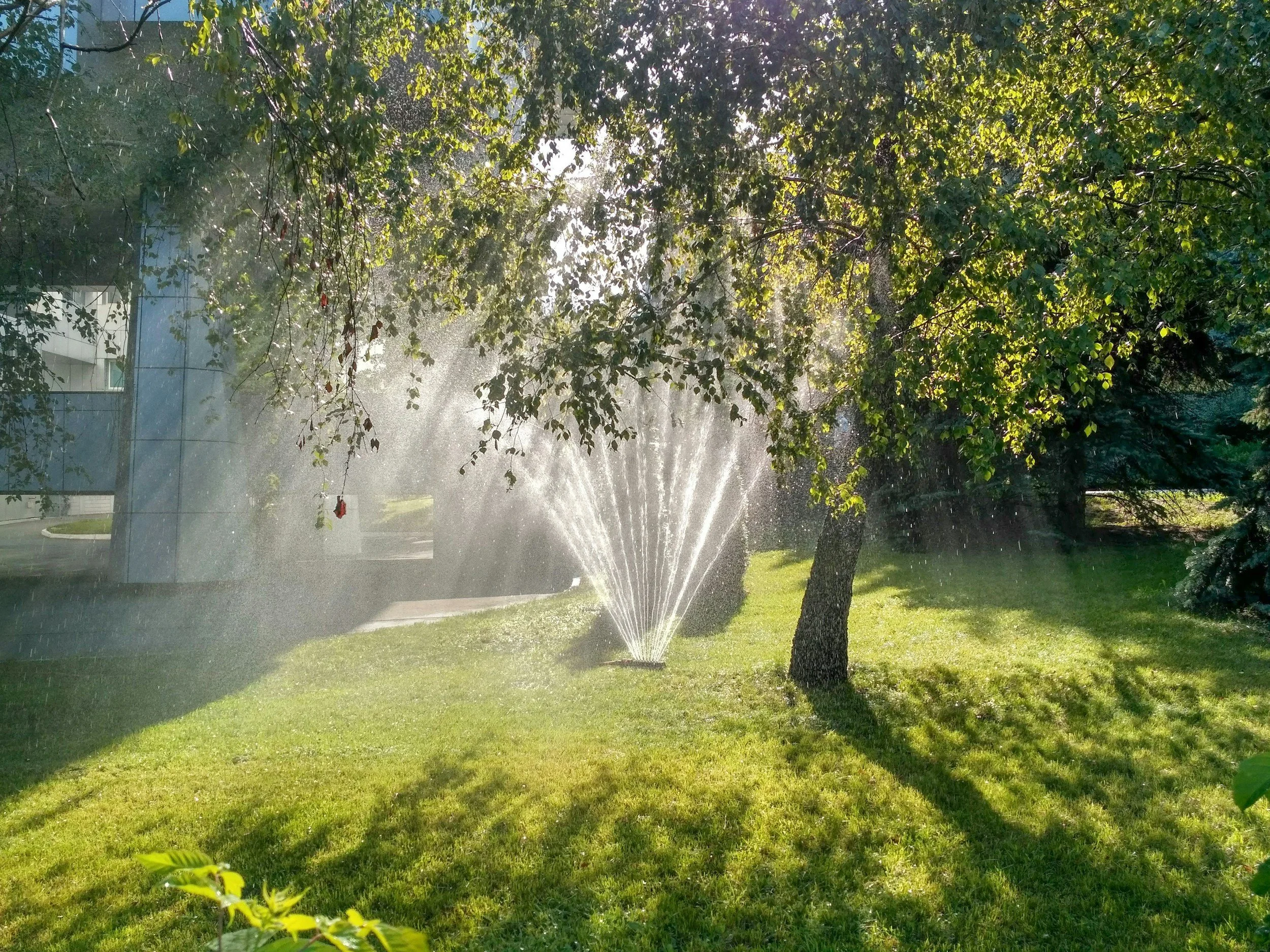
The short answer: water longer, less often
In this kind of heat, three minutes is almost always too short — and honestly, even six minutes may still be a little light depending on your sprinkler heads, your water pressure, and your soil.
Here’s the big idea that changes everything: deep and infrequent beats short and daily. A few longer, thorough waterings train your grass to send roots down deep, where the soil stays cooler and holds moisture longer. Watering a little bit every single day does the opposite — it keeps the roots shallow and lazy, sitting right at the surface where they fry in the Houston sun.
For most lawns here, 3 days a week is a good summer rhythm. The question then becomes how many minutes per zone — and that’s where a real example helps.
What we actually run at our own house
People always want a real number to start from, so here’s exactly what Todd has our controller set to right now:
Our current summer settings
That doesn’t mean every yard needs that exact setting — your heads and pressure may be different from ours — but it gives you a solid starting point. The goal is to water deeply enough that the moisture actually reaches the root zone instead of just darkening the very top of the soil.
So if you’ve been running six minutes, I’d bump it up toward that range and then watch how the lawn responds over the next week.
The Houston clay trick: cycle and soak
Here’s the part most folks miss — and it’s the one that costs you real money.
A lot of our yards sit on heavy gumbo clay, and clay can only drink so fast. It’s dense, it’s tight, and once the surface is saturated, everything else you put down just runs off the top. So when you run a zone for 18 minutes straight, the first few minutes soak in fine — and then the ground says no more, and the rest of it heads for the street.
Go stand at the curb next time your sprinklers run. If you see water sheeting down the driveway or trickling along the gutter, look at it for a second, because that’s your money going into a storm drain. And the grass never got it. You paid for that water, the water bill counted it, and the roots never saw a drop.
This is the number one reason people tell me “I water constantly and my lawn still looks terrible.” They’re not watering their lawn. They’re watering the concrete.
The fix
Split the run into two shorter cycles with a break in between. Instead of one straight 18 minutes, do 9 minutes — wait 30 to 45 minutes — then 9 more.
That pause is doing all the work. The first pass wets the surface and starts the water moving down. The soak period gives the clay time to actually absorb it. The second pass then drives moisture deep, into ground that’s ready to take it, instead of skating across a saturated surface.
Same 18 minutes. Same water bill. Completely different lawn.
And if your controller doesn’t have a “cycle” or “soak” setting, you don’t need one — just build two start times, an hour apart, and run every zone at half its normal time in each. Nine minutes at 5:00, nine minutes at 6:00. Done, with buttons your controller already has.
Now — if that one caught you off guard, it’s worth asking what else is quietly going wrong out there.
The Full Guide · 27 Pages
Want the whole thing written down?
Everything above is the short version. The full guide is 27 pages of exactly what Todd would tell you if you called him — every zone, every season, every mistake.
- The temperature dial — what to change when it hits 93°, and when to back off in the fall
- Cycle & soak for gumbo clay — how to stop watering your driveway
- The tuna can test — five minutes, and you never guess again
- 3 signs it's thirsty — and 3 signs you're drowning it
- No sprinkler system? A whole chapter on doing this with just a hose
- Printable garage card + a fill-in worksheet for your own zones
Launch price: $19 $29
Instant PDF download
By Todd Farber, Aggie horticulturist · Growing on the Gulf Coast since 1991
How to tell if your lawn actually needs water
Rather than guessing, let the grass tell you. These three signs mean it’s ready for a deeper drink:
- The footprint test. Walk across the lawn. If your footprints stay pressed down instead of springing back up, the blades are dehydrated.
- A bluish-gray cast. Healthy summer turf is bright green. When it starts looking dull, bluish-gray, or smoky, that’s an early thirst signal — before it ever turns brown.
- Folding or curling blades. Grass literally folds itself in half to conserve moisture. If the blades look narrow and pinched, they’re trying to hang on.
Catch it at the bluish-gray or footprint stage and you can water before any real stress sets in. Wait until it’s crispy brown and you’re playing catch-up.
The best time to water is early morning
Early morning — roughly before the sun really gets going — is still the best window, and it’s not close. Water before the heat of the day and far less is lost to evaporation, so more of it actually reaches the roots.
Just as important: morning watering lets the blades dry out over the course of the day. Watering in the evening leaves your grass sitting wet all night, and around here that’s an open invitation for fungus and brown patch. Give it a deep drink at sunrise and let the day dry it off.
The Houston Summer Watering Schedule
Stop guessing every time the heat cranks up. Get the exact one-page cheat sheet we keep by our own controller.
- How long & how often to run each zone
- The cycle-and-soak trick for clay soil
- 3 signs your lawn is secretly thirsty
Drop your email below and it’s yours ↓
Every yard is a little different — soil, sun, sprinkler layout — so use our numbers as a starting point and let the grass guide you from there. Start around 3 days a week, water deep in the early morning, split long runs with cycle-and-soak, and watch for those thirst signals.
That’s the short version, and it’ll get you most of the way there.
The Full Guide · 27 Pages
The rest of it is in the guide.
The temperature dial for when it hits 93°. The tuna can test, so you know your numbers instead of ours. How to water with just a hose. The three signs you’re drowning your lawn. A printable card for the garage wall, and a worksheet for your own zones.
Launch price: $19 $29
Instant PDF download
Still stuck on something? Send us your question — we’re real people and we answer.
