Is Your Pine Tree Dying from the Top Down? Here's What's Really Happening
A Houston homeowner's guide to identifying and responding to pine bark beetle infestations
When Eric Sent Us These Photos, We Knew Immediately
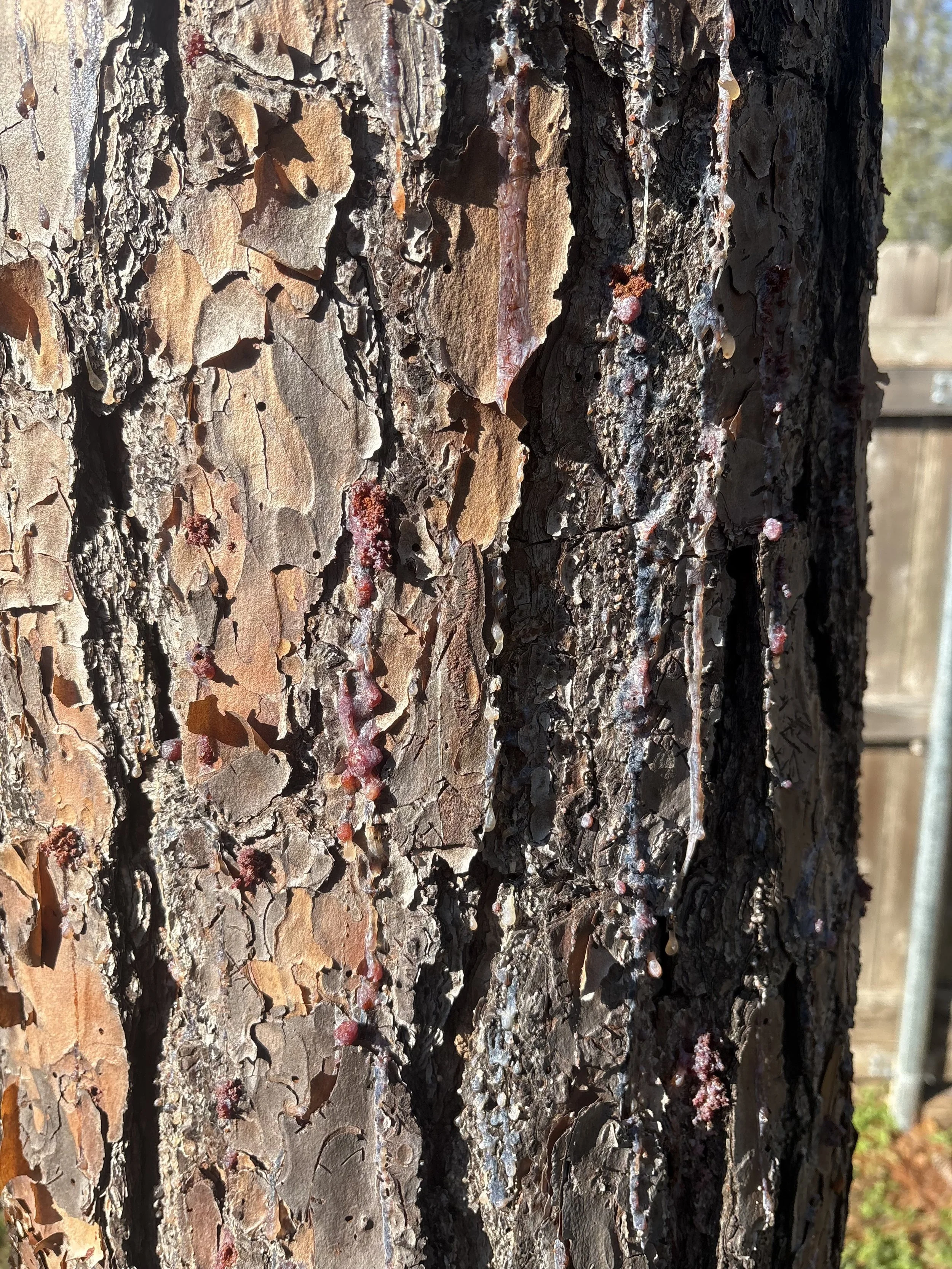
sap was bleeding down the trunk
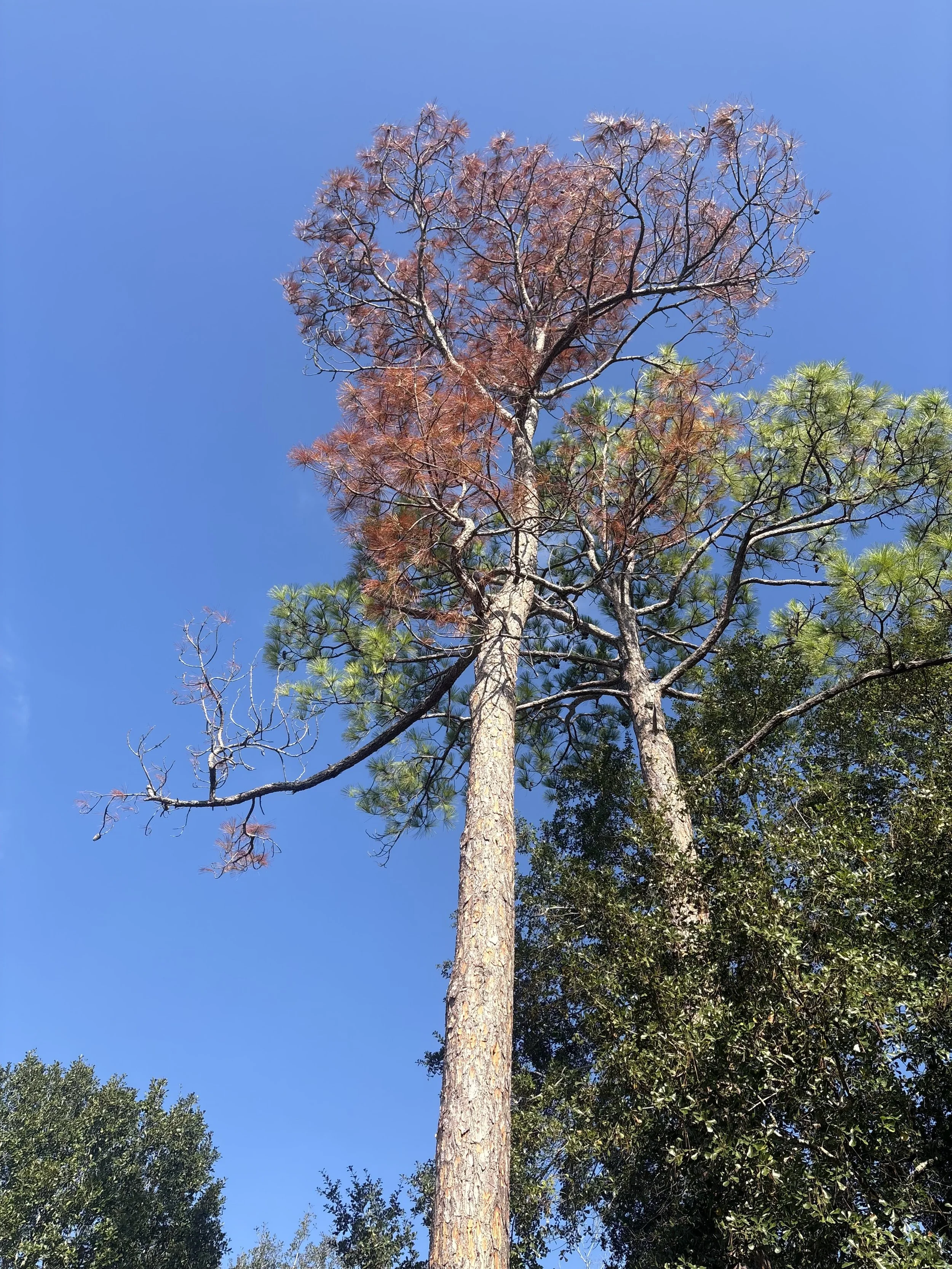
The top was turning brown, the canopy was thinning,
Eric noticed something wrong with his pine tree. The top was turning brown, the canopy was thinning, and sap was bleeding down the trunk. Like many Houston-area homeowners, he hoped it was just drought stress or maybe a fungal issue that could be treated.
Question: “ Hi Garden Guy, This tree looks to be dead from a possible infestation.I don’t want to cut it down if it can survive. Can you help me understand what’s going on? “
Garden Guy’s Answer: What’s Happening
The symptoms — dead top, thinning canopy, and visible pitch (sap) bleeding along the trunk — indicate a pine bark beetle infestation (likely Southern Pine Beetle or Ips Engraver Beetle).
Once these beetles get under the bark, they block water movement in the tree — that’s why the die-back starts at the top and works its way down.
Can the Tree Be Saved?
At this stage, the tree is too far gone to recover.
No treatment can reverse the internal damage once the crown has browned out.
What to Do Next
I recommend removing the tree within 1–2 months, ideally before spring beetle activity increases.
Unfortunately, the diagnosis was more serious.
After reviewing his photos closely, the symptoms told a clear story: pine bark beetle infestation — specifically, Southern Pine Beetle or Ips Engraver Beetle, the two most common culprits in the Houston and Sugar Land area.
What Pine Bark Beetles Do (And Why It's So Destructive)
Pine bark beetles are tiny insects — about the size of a grain of rice — but they cause massive damage once they get under the bark.
Here's what happens:
Beetles bore into the tree and lay eggs under the bark
The larvae create galleries as they feed, cutting off the tree's water transport system
Die-back starts at the top and works its way down as the tree slowly starves
Pitch (sap) bleeds from the trunk as the tree tries to defend itself
Eventually, the entire canopy browns out and the tree dies
Once you see a brown crown and significant pitch bleeding, the internal damage is already severe.
Can a Beetle-Infested Pine Tree Be Saved?
This is the question every homeowner asks. And unfortunately, once the symptoms are visible — especially a browned-out crown — the tree is too far gone to recover.
No treatment can reverse the internal damage. The beetles have already disrupted the vascular system, and the tree can't bounce back.
What You Should Do Next
If you're seeing these symptoms in your pine tree, here's the recommended plan:
Remove the tree within 1–2 months, ideally before spring when beetle activity increases.
Why the urgency?
Prevents spread to nearby pines — Beetles will migrate to healthy trees on your property or your neighbors'
Reduces safety hazards — Dead limbs and trunk failure become serious risks during storms
Cleans up the area before Houston's storm season kicks in
Any reputable tree removal service can handle the job. Just make sure they dispose of the wood properly so the beetles don't migrate to other trees.
How to Spot Pine Bark Beetle Damage Early
The earlier you catch it, the better your options. Here are the warning signs:
✓ Top-down die-back — Crown turning brown while lower branches stay green
✓ Thinning canopy — Needles dropping, sparse foliage
✓ Pitch tubes on trunk — Small blobs of sap where beetles have bored in
✓ Woodpecker activity — Birds pecking at the bark to feed on beetle larvae
✓ Sawdust at the base — Fine, reddish-brown dust from beetle tunneling
If you see any combination of these symptoms, it's time to get a professional opinion.
Why This Matters for Sugar Land and Houston-Area Homeowners
Pine bark beetles are a growing concern in Southeast Texas. Our warm winters and periodic droughts stress trees, making them more vulnerable to infestation. And once beetles move into a neighborhood, they can spread quickly from tree to tree.
If you have multiple pine trees on your property, removing an infested tree promptly is the best way to protect the others.
What Garden Guy Can Do for Your Trees
We've been helping Houston-area homeowners protect their landscapes since 1991. Todd Farber, our Aggie-trained horticulturist with 30+ years of experience, can assess your trees and give you clear, honest advice about what's happening and what to do next.
We work a little differently than most landscaping businesses. We provide free expert advice to homeowners — and in return, we simply ask for an honest Google review if you found the information helpful. No obligation, no pressure. Just straightforward guidance from someone who genuinely cares about protecting your yard.
🌲 Worried About a Tree on Your Property?
Send us photos and a description of what you're seeing:
📧 Email: hello@garden-guy.com
📞 Call/Text: 281-208-4400
Visit our site: www.askgardenguy.com
We'll review your photos and give you our honest assessment — whether it's an urgent issue or something you can monitor over time.
☕ Found This Article Helpful?
If this information gave you the clarity you needed, we'd love your support:
Buy Garden Guy a Coffee ☕
Or leave us a Google review: Leave a Review ⭐
Your reviews help other Houston-area homeowners find the expert advice they need to protect their properties.
About the Author
Todd Farber
Aggie Horticulturist & Garden Guy
Serving the Houston area since 1991
Nextdoor Neighborhood Favorites 2021–Present
Keywords: pine bark beetle Houston, dying pine tree Sugar Land, pine tree removal Houston, tree disease Texas, Southern Pine Beetle, pine tree top dying, Houston tree care, Sugar Land landscaping, Sienna tree service, Telfair tree removal
