Mealybugs in Houston: How to Identify and Get Rid of Them
Mealybugs in Houston: Not Cotton. Not Mildew. And Definitely Not Harmless.
If you're finding little white fuzzy clumps on your plants right now, you are not alone — and no, you didn't spill a cotton ball.
I went back through our inbox and found at least nine separate mealybug questions since April — and that doesn't count all the photos posted on our Facebook page.
Candy found them buried inside her pink muhly grass. Rachel sent photos of them on portulaca. Lisa and Mike found them on plumerias. Shawna and June had them on hibiscus and Rose of Sharon. Susan found them underneath her mature holly leaves, and Jorge sent photos of them on a magnolia.
So yes… mealybugs are having a moment here on the Gulf Coast. Warm nights, humid mornings and a lot of tender new growth is exactly the buffet they've been waiting for.
🔍 What Do Mealybugs Look Like?
Look for small white, fuzzy or cottony clumps. Most folks describe them as tiny pieces of lint stuck to the plant — and that's exactly right. Up close, you may see a soft-bodied insect underneath that waxy fluff.
Where mealybugs hide on your plants
- Where the leaves meet the stems
- Underneath the leaves
- Inside tight, tender new growth
- Deep down inside ornamental grasses and dense shrubs
- Around flower buds and branch joints
They are experts at hiding in the spots you don't check. That's why so many people don't notice them until the plant already looks sick.
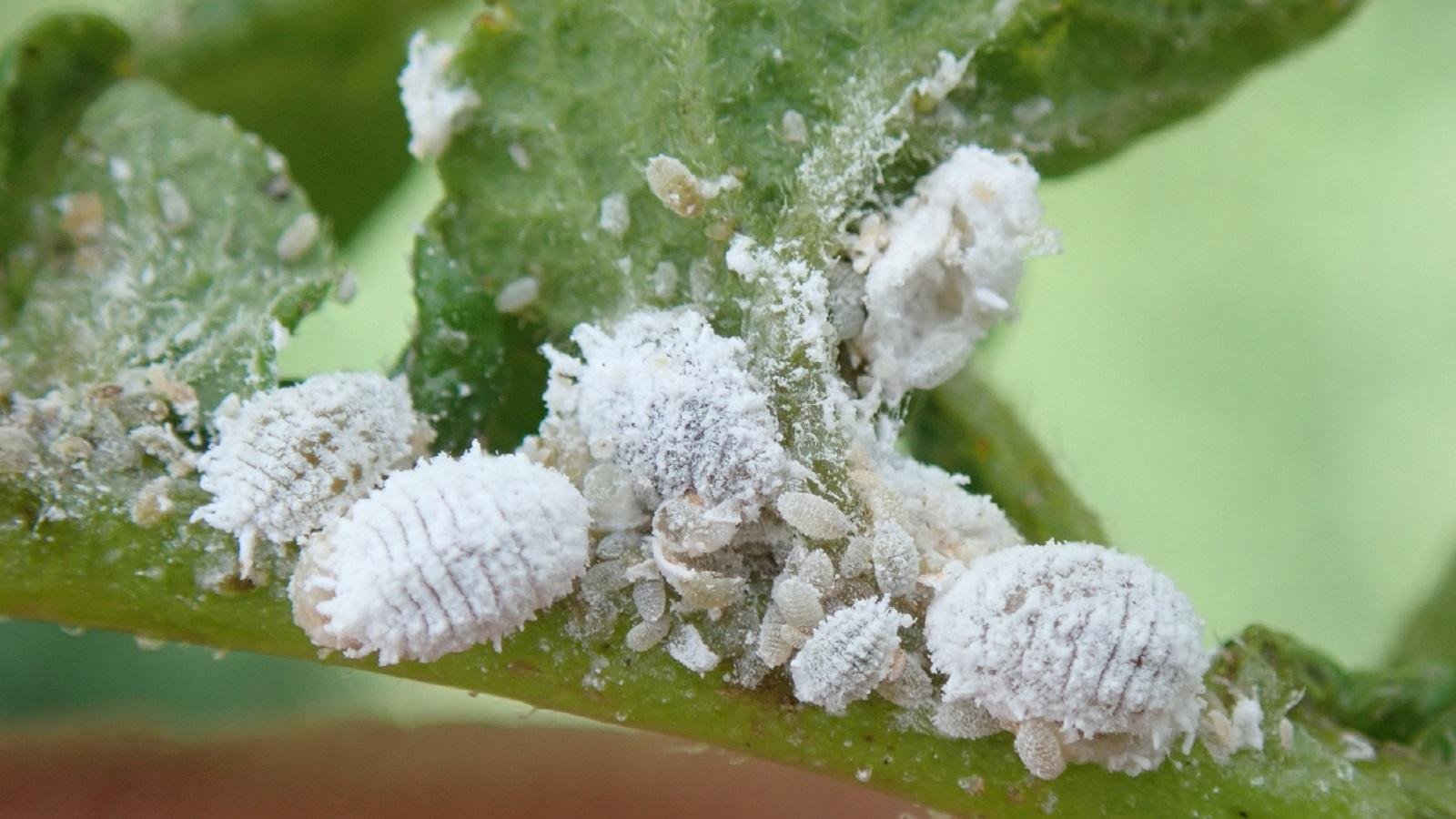
white cottony mealybugs clustered on a hibiscus stem in a Houston garden
Signs You Have a Mealybug Problem
Mealybugs suck sap out of your plant. A few won't do much. A colony will absolutely run a plant into the ground.
Houston note: Sooty mold gets blamed for a lot of things it didn't do. The mold is a symptom, not the disease. If you've got black film on the leaves, flip them over and go looking for what's producing the honeydew — mealybugs, aphids, scale or whiteflies.
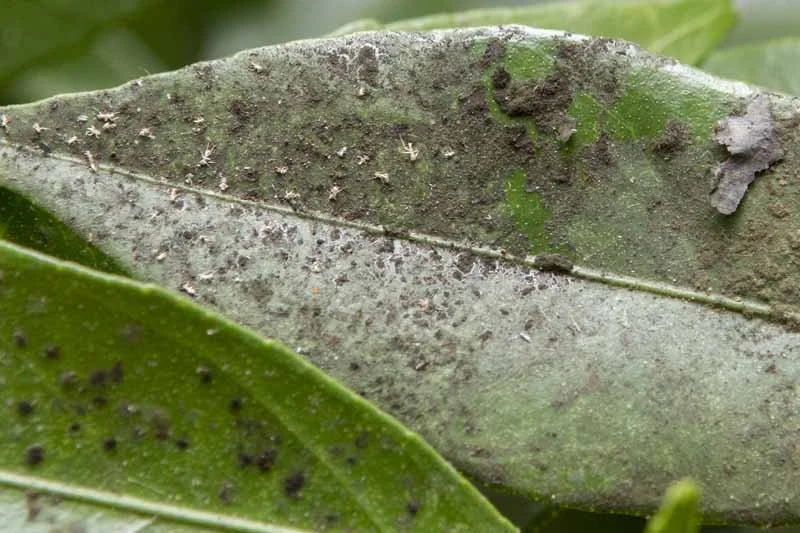
Black sooty mold on leaves caused by mealybug honeydew
🌿 How Do You Get Rid of Mealybugs?
Here's the order I'd work in. Do not skip straight to step three — knocking the population down first makes everything else work better.
Blast them with water
A firm stream from the hose knocks off a surprising number of them. Get up under the leaves and into the crotches of the branches.
Prune and bag the worst of it
Cut out heavily infested growth when it's practical — and bag it. Don't lay those clippings down beside another plant and walk off. That's how it spreads across the bed.
Treat with insecticidal soap or horticultural oil
Use a commercial product labeled for your particular plant. Coverage is everything here. These pests hide in every tight little crevice, so a light misting over the top does nothing. Soak it.
Respect the Houston heat
Do not spray oils on a hot, sun-baked or drought-stressed plant. You will burn the foliage. Follow the temperature range on the label, water the plant first, spray early or late, and test a small section before you do the whole thing.
Check back and repeat
One quick spray will not solve a well-established infestation. Repeat on the schedule the label gives you. Mealybugs overlap generations, so you're treating the ones that hatch after you sprayed.
Watch the ants
Ants feed on that honeydew and will actively defend mealybugs from ladybugs, lacewings and the other beneficials that would otherwise eat them for you. Control the ants and you get free help.
The 2021 freeze taught us this one: a stressed plant is a target. Anything that's already struggling in our clay and heat is the first thing pests will find. Healthy, properly watered plants shrug this stuff off a whole lot better.
🛒 What We'd Reach For
Read the label, match it to your plant, and respect the temperature range. That last part is not optional in Houston.
Insecticidal Soap
Your first move on light to moderate infestations. Kills on contact — which means coverage is everything. Soak the undersides and the leaf joints.
See Options →Horticultural Oil
Smothers the eggs and the crawlers the soap misses. Powerful — and exactly why you follow the label temperature range and test a small section first.
See Options →Ant Control
Ants farm the honeydew and chase off the ladybugs that would eat your mealybugs for free. Break up that partnership.
See Options →Systemic (Ornamentals Only)
For a severe infestation on a non-edible ornamental. Read that label carefully, protect pollinators, and mix it exactly as directed.
See Options →These are Amazon affiliate links. If you buy through them, we earn a small commission at no extra cost to you — and it keeps the free advice coming. Thank you. 🌿
What About a Really Bad Infestation?
A severe infestation on a non-edible ornamental plant may call for a systemic product specifically labeled for mealybugs. Systemics move through the plant's tissue, which means the insect gets a dose no matter how deep it's hiding.
⚠️ Read that label like your garden depends on it
Protect your pollinators. Never use a systemic on a plant that's actively blooming and feeding bees if the label says otherwise. Never use one on anything you plan to eat unless the label specifically allows it.
And hear me on this: more product does not mean better control. It means a dead plant and a bigger problem. Mix it right.
If you're standing there staring at a twenty-year-old plumeria or a mature holly and you're not sure what you're looking at, send us a photo before you spray anything. That's what we're here for.
Mealybug FAQs
Are those white fuzzy things on my plant mealybugs or mildew?
Mildew is a flat, powdery film that wipes off like dust. Mealybugs are raised, cottony clumps that cling — and if you smear one, you'll get a smudge. If it moves or leaves a mark, it's a bug.
What plants do mealybugs attack in Houston?
Just about anything, but we see them most on hibiscus, plumeria, Rose of Sharon, portulaca, holly, magnolia, ornamental grasses like pink muhly, and almost any houseplant you move outside for the summer.
Will mealybugs kill my plant?
A light population won't. A heavy, untreated colony absolutely can — through sap loss, sooty mold blocking the leaves, and the general decline that follows.
Can I spray horticultural oil in the summer?
Carefully. Not on a sun-baked or drought-stressed plant, and only within the temperature range printed on the label. Spray early morning or evening, and always test a small section first.
Why are there ants all over my infested plant?
Ants farm mealybugs for their honeydew and will chase off the ladybugs and lacewings that would otherwise eat them. Handling the ants is part of handling the mealybugs.
Still not sure what's on your plant?
Send us a photo and we'll take a look — that's what Ask Garden Guy is for. Or if you want Todd's eyes on the whole yard, grab a private call.
Ask Garden Guy Book a Private CallIf this saved your hibiscus, it might be worth a cup or two of coffee. ☕ No pressure — we'll keep answering either way.
— Todd & Sabrina
Garden Guy 🌿 · Serving Sugar Land, Houston & the Gulf Coast since 1991
