New to Texas? Here's How Gardening Really Works in Houston, Austin, San Antonio & Dallas
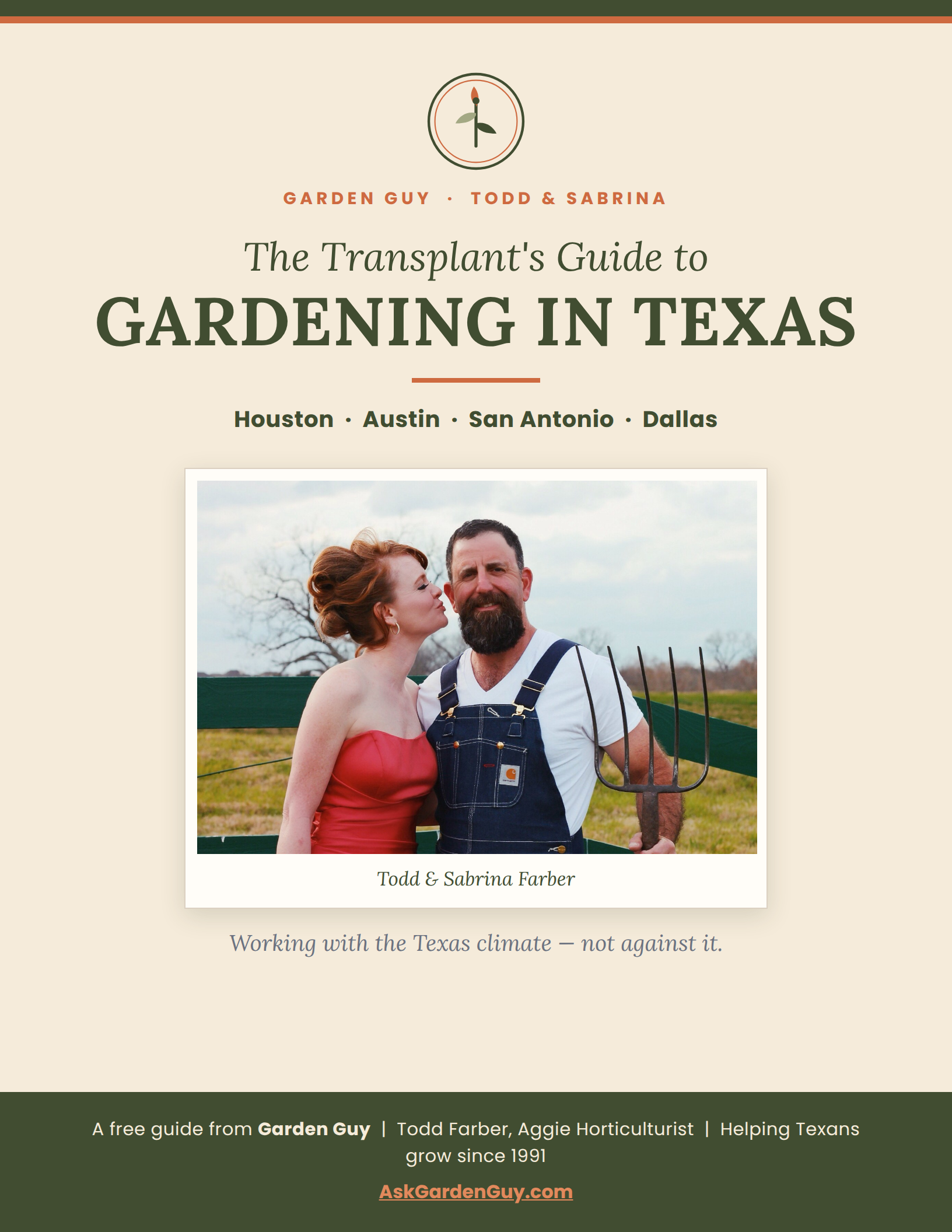
The gardening rules you brought with you don't apply here — and Houston, Austin, San Antonio, and Dallas are four different growing worlds. Here's what every new Texas gardener needs to know, city by city.
New to Texas · Start Here
New to Texas? Here's How Gardening Really Works in Houston, Austin, San Antonio & Dallas
The gardening rules you brought with you probably don't apply here — and even within Texas, these four cities are four different growing worlds. Here's what a new Texas gardener actually needs to know.
Houston · Austin · San Antonio · Dallas
In this guide
Your city at a glance — zone, soil & frost dates The four things that decide everything What to plant in Texas, season by season Get the free printable guide New-Texan gardening FAQsWelcome to Texas. If you just moved here — from another state or another part of the state — the first thing to know is that gardening in Texas is its own animal. We get a long, generous growing season and a huge range of plants we can grow. We also get brutal heat, sticky humidity on the coast, drought in the middle of the state, heavy clay and rocky limestone soils, and the occasional hurricane or hard freeze that rewrites the whole plan.
We're Todd and Sabrina Farber — Garden Guy. Todd is an Aggie Horticulturist, and we've been helping Texans grow since 1991. Every week we answer real garden questions from folks all over the state, and the newcomers almost always trip over the same thing: they garden like they're still back home. The fix is simple — learn your corner of Texas first.
Free download
We put everything above — plus trees, fruit, pests, pollinators, the full planting calendar, and preparing for Texas weather — into one clean, printable Transplant's Guide to Gardening in Texas. No fluff, no sales pitch. Just what works, city by city.
Enter your email below and we'll send it straight over ↓
The one chart every new Texas gardener needs
Short answer: Houston is USDA zone 9b, Austin and San Antonio are 9a, and Dallas is 8b — and each metro fights a different core problem: Houston battles too much water and humidity, Austin and San Antonio too little water and rocky soil, and Dallas the state's toughest clay plus colder winters.
Houston, Austin, San Antonio, and Dallas are only a few hours apart. For gardeners, they might as well be different states:
| Houston / Gulf Coast | Austin | San Antonio | Dallas–Fort Worth | |
|---|---|---|---|---|
| USDA Zone (2023) | 9b | 9a | 9a | 8b |
| Avg. last spring freeze | mid-February | early–mid March | early March | mid-March |
| Avg. first fall freeze | early December | early December | late November | late November |
| Annual rainfall | ~50 in. (wettest) | ~34 in. | ~32 in. (driest) | ~38 in. |
| Signature soil | Heavy "gumbo" clay & coastal sand | Limestone west of I-35, black clay east | Alkaline clay over limestone; caliche | Alkaline Blackland "black gumbo" clay |
| Biggest headache | Humidity & fungal disease; soggy clay | Thin rocky soil; watering limits | Drought & watering restrictions | Shrink-swell clay; iron chlorosis; colder snaps |
The four things that decide everything
Short answer: Get your zone, soil, sun, and water right and most Texas gardening problems solve themselves. Match plants to your city's conditions instead of fighting them.
Here's the short version of each — with our deeper free guides if you want to go further.
Pick the right grass for your city
St. Augustine rules humid Houston (and plant sod, not seed). Sunny, water-restricted Austin, San Antonio, and Dallas lean Bermuda, Zoysia, or native Buffalograss. Full playbook » Houston Lawn Care hub and the free Texas Two-Step™ Lawn Method.
Know your soil before you plant
Gulf Coast gumbo, alkaline Blackland clay, or thin Hill Country caliche — each needs a different game plan. When a lawn keeps failing, usually the grass isn't the problem, the foundation is. Soil test first at soiltesting.tamu.edu.
Water deep, not often
More water rarely means healthier plants. On our clay, "cycle and soak," and after a Houston rain let the sprinklers rest. Our free Summer Watering guide breaks it down for the Texas heat.
Beat the weeds without the guesswork
Identify first, spot-treat second — never blanket-spray. Get our free Texas Lawn Weed ID Guide, and if nutgrass has you beat, the full Nutgrass Battle Plan.
Plants that actually thrive here
Start with Texas-tough choices: see Todd's 15 Best Perennials, our favorite privacy tree, the best plants for shady yards, and tough Texas roses.
Grow food almost year-round
Texas has a spring and a fall vegetable season — and fall is our best-kept secret. Get the varieties and timing in the Fall Garden Starter Kit, and plant for pollinators with our Hummingbird Essentials.
What to plant in Texas, season by season
Short answer: Texas has two vegetable seasons. Plant warm-season crops (tomatoes, peppers, squash) right after your spring frost date, and plant cool-season crops (greens, broccoli, carrots) in early fall — our best-kept secret. Fall and winter are also the best time to plant trees, shrubs, and roses.
Because our growing season is so long, "what to plant now" changes fast. Use this as your quick reference — and remember timing runs earliest in Houston and a few weeks later up in Dallas.
Wake-up & the first warm crops
Plant: tomato & pepper transplants (Houston late February → Dallas mid-March), potatoes, and onion transplants. Get the last cool-season greens in before it heats up. Also great now: trees, shrubs, and roses while they're still dormant.
Prime warm-season planting
Plant: beans, squash, cucumbers, corn, and melons; then okra and southern peas as the soil warms. Add herbs like basil and warm-season color (lantana, salvia, zinnia, vinca). Get tomatoes in early — once nights stay hot, they stop setting fruit.
Heat champions & the fall head-start
Plant: the crops that laugh at Texas heat — okra, southern peas, sweet potato, and eggplant. Mostly it's mulch, deep watering, and maintenance. The secret move: in mid-to-late summer, set out fall tomato and pepper transplants for a second harvest.
The best-kept secret season
Plant: the whole cool-season lineup — broccoli, cabbage, cauliflower, kale, collards, lettuce, spinach, chard, carrots, beets, radishes, and turnips — plus garlic. Sow wildflower and bluebonnet seed now. It's also the #1 time to plant trees and shrubs, and to set out cool-season color (pansies, violas, snapdragons).
Plant the bones & plan ahead
Plant: trees, shrubs, and bare-root roses and fruit trees while dormant — roots establish before summer. Set onion transplants (Houston, January). Do your dormant pruning, and get ready for lawn season: your Texas Two-Step™ pre-emergent goes down before the soil hits 55°F.
Want the full month-by-month plan with specific varieties and a lawn-care calendar? It's all inside the free printable guide below.
Free bonus: the 1-page Texas Planting Calendar
Print it, stick it on the fridge — what to plant, every season, at a glance.
New Texas gardener FAQs
What USDA planting zone am I in?
Per the 2023 USDA map: Houston is Zone 9b, San Antonio and Austin are 9a, and Dallas–Fort Worth is 8b. Zones can shift within a single county, so look up your exact address at planthardiness.ars.usda.gov.
When should I plant tomatoes in Texas?
Plant transplants after your last spring frost — roughly late February to March in Houston, early–mid March in Austin and San Antonio, and mid-March into April in Dallas. Get them in early so they set fruit before summer nights turn hot. Texas also gets a second (fall) tomato crop from transplants set out in mid-to-late summer.
When can I plant vegetables in Texas?
Texas has two seasons — spring and fall. Warm-season crops go in after the spring frost; cool-season crops (greens, broccoli, carrots) go in during early fall, which is our best vegetable season. Houston plants earliest and Dallas latest, so use a calendar built for your zone, not a national one.
When is the best time to plant trees and shrubs in Texas?
Fall through winter. Planting during the cooler dormant season lets roots establish before the brutal summer heat, so the plant is far more likely to survive its first July. Spring planting works too, but fall is ideal.
What's the best grass for a Texas lawn?
It depends on your city and sun. St. Augustine is the go-to for humid, shadier Houston yards (plant sod, not seed). For sunny, water-restricted Austin, San Antonio, and Dallas, Bermuda, Zoysia, or native Buffalograss usually make more sense.
Why is my new Texas lawn dying?
Usually it's not lack of effort — it's watering habits, the wrong grass for the spot, or a soil/disease issue. In humid Houston, brown patches in summer are often chinch bugs or fungal disease, not drought. Diagnose before you spray: part the grass at the edge of a dying patch and look before reaching for a product.
Do I need to water my lawn in winter in Texas?
Not much. Warm-season grasses go dormant and brown in winter, and overwatering then invites disease. Water only during long, dry, warm spells — otherwise let the lawn rest until it greens up in spring.
Can I use the same gardening advice for Houston and Dallas?
Not really. Houston fights humidity, fungal disease, and soggy clay. Dallas fights shrink-swell clay, alkaline soil, and colder winters. Austin and San Antonio fight drought and watering restrictions. The plants and timing all shift by city.
Does Garden Guy sell plants?
No — we're a design and installation company and an advice resource, not a nursery. That means our recommendations have no sales agenda. In the greater Houston area we design and install landscapes; everywhere in Texas, our free guides are here to help you DIY.
Keep going — more free Texas guides
Lawn care
The Texas Two-Step™ Lawn Method, the weed ID guide, summer watering, and the full Houston Lawn Care hub.
Plants & design
Todd's 15 Best Perennials, tough Texas roses, the best shade plants, our favorite privacy tree, and hummingbird plants.
Grow your own food
Get a head start with the Fall Garden Starter Kit, and our weekly 3-2-1 garden tips newsletter.
Ask us anything
Ask Garden Guy a question, join the free Garden Club, or book a call with Todd. In Houston we also design & install.
Stuck on a weed, a bug, or a brown spot? Send us a photo — we answer real garden questions every week, and it's always free.
— Todd & Sabrina Farber
Garden Guy · Todd Farber, Aggie Horticulturist · Helping Texans grow since 1991
Garden Guy is a landscape design & installation company and gardening resource — not a nursery. As an Amazon Associate we may earn from qualifying purchases through our storefront links, at no extra cost to you; we only recommend products we'd use ourselves.
