Hammerhead Worms in Houston: How to Identify and Kill This Invasive Garden Predator
So you flipped over a pot, peeled back the mulch, or stepped out after a good Houston rain and found a long, slimy, honey-colored worm with dark stripes running down its back — and a head shaped like a tiny shovel or a hammerhead shark. Your first thought was probably, "What in the world is that thing?"
Good news: you've got a sharp eye. Bad news: that's a hammerhead flatworm, and it's an invasive predator you don't want setting up shop in your yard. Let's walk through exactly what it is, why you should never chop it in half, and how to get rid of it the right way.
What Is a Hammerhead Worm?
The hammerhead worm is a land planarian — a flatworm in the genus Bipalium. Two species turn up around the Houston area: Bipalium kewense (the one most folks find) and Bipalium vagum. Both are native to Southeast Asia and almost certainly hitched a ride into the U.S. decades ago in the soil of imported nursery plants. They love our hot, humid Gulf Coast climate, which is why Sugar Land, Missouri City, Katy, Pearland, and Friendswood gardeners keep running into them.
Here's how to know you've got one:
- Flat, ribbon-like body. Not round like an earthworm — it's flattened, like a wet noodle that's been pressed.
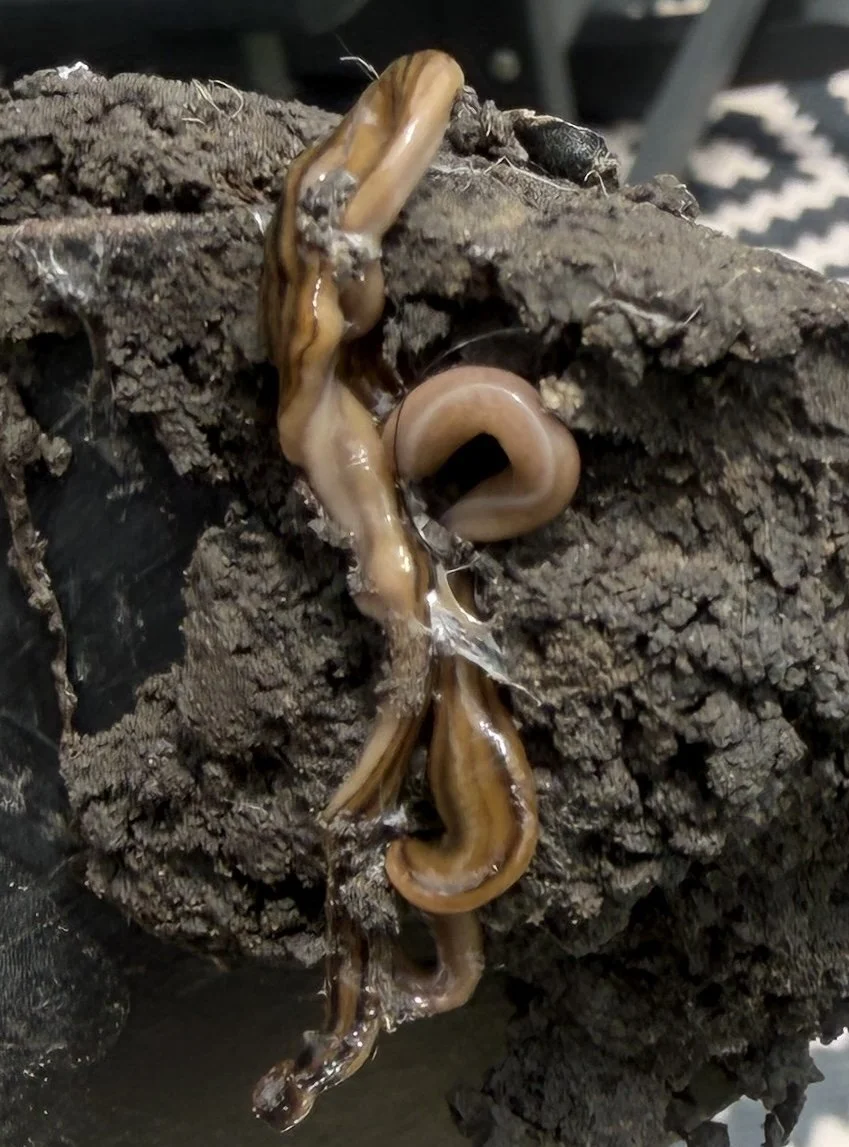
- Shovel- or fan-shaped head. The "hammerhead." It looks like a half-moon or a flattened spade. This is the dead giveaway.
- Honey to tan coloring with dark stripes. Usually one to five dark lines running the length of the body.
- Long and skinny. Typically 8 to 12 inches, but they can stretch out to 15 inches when they're moving.
- Slimy. They glide on a trail of mucus and look constantly wet.
If you see a flattened, striped worm with a shovel head — that's your hammerhead.
Hammerhead Worm vs. Earthworm: Don't Mix Them Up
This matters, because earthworms are the good guys. They aerate your soil, break down organic matter, and feed your lawn from below. You want a yard full of them. The hammerhead worm, on the other hand, eats earthworms for a living.
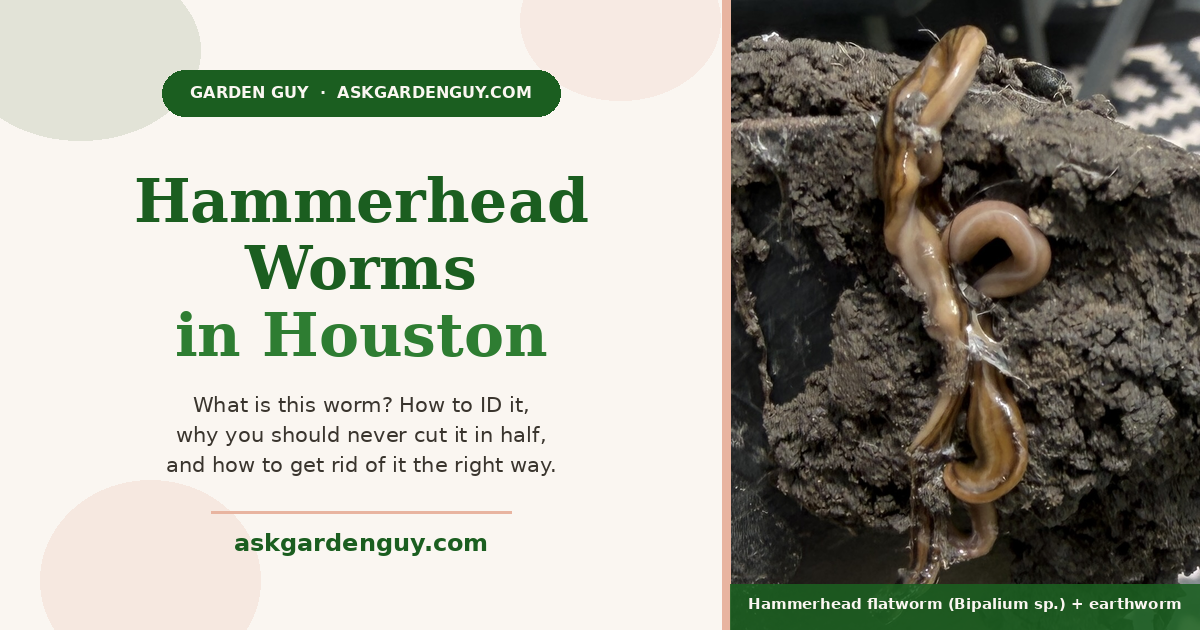
The easy way to tell them apart: an earthworm is round, pinkish-red, smooth, and has no defined head. A hammerhead worm is flat, tan with stripes, slimy, and has that unmistakable shovel-shaped head. If you found one curled up next to an earthworm like in the photo above, you basically caught the predator next to its dinner.
Are Hammerhead Worms Dangerous?
To you? Not seriously — but you still shouldn't handle them bare-handed. Here's the straight talk:
- They secrete a toxin. Hammerhead worms produce a tetrodotoxin-type compound (the same family of toxin found in pufferfish) in their skin and mucus. On human skin it can cause irritation, so wear gloves.
- They can carry parasites. Some of these flatworms carry parasitic nematodes, which is another good reason not to touch them with bare hands and to wash up afterward.
- Keep pets away. A curious dog that licks or eats one can get an upset stomach or mouth irritation. Don't let Fido play with it.
Bottom line: they're not going to hurt you through casual contact, but treat them with the same respect you'd give a slug you don't want to touch — gloves on, wash after.
Why You Should NEVER Cut a Hammerhead Worm in Half
This is the single most important thing in this whole article, so listen up. Do not chop it. Do not squish it. Do not run it through the mower or tiller.
Hammerhead worms reproduce by fragmentation — meaning every piece you cut off can regenerate into a brand-new worm in about 10 days. Slice one in half and you haven't killed it, you've made two of them. Till a patch of soil where they're living and you can seed your whole bed with the things. This is the mistake nearly everybody makes the first time, so don't be everybody.
How to Kill a Hammerhead Worm the Right Way
The goal is to kill the entire worm at once without breaking it apart. Here's Todd's go-to method:
- Glove up. Use gardening gloves, or pick it up with a paper towel, leaf, or stick. Never bare hands.
- Bag it. Drop the worm into a zip-top bag or sealed container. This keeps it from crawling off after treatment.
- Hit it with salt, vinegar, or citrus oil. Any of these will do the job. Plain table salt works just like it does on slugs. A heavy splash of concentrated (horticultural) vinegar or a few drops of orange/citrus oil works even faster.
- Seal and toss — or freeze. Seal the bag and throw it in the trash. If you want to be extra sure, pop the sealed bag in the freezer for 48 hours first, then dispose of it.
That's it. No chopping, no squishing, no leaving pieces in the dirt.
The Easy Button: Our Hammerhead Flatworm Removal Kit
Don't want to hunt around the garage for gloves, vinegar, and a bag every time you spot one? We pulled together everything you need in one place. Grab the Hammerhead Flatworm Removal Kit on Amazon here — gloves, the treatment, and the supplies to bag and finish the job without ever touching the worm.
As an Amazon Associate we earn from qualifying purchases.
Want the Printable Version? Grab Our Free Guide
We turned this whole thing into a free, printable Hammerhead Worm Survival Guide you can keep in the garage or share with a neighbor. Enter your email below and we'll send it straight to your inbox — no charge, just good Houston lawn help from Garden Guy.
Where You'll Find Hammerhead Worms in Your Houston Yard
These guys are nocturnal and they hate the sun, so during the day they hide. You'll most often spot them:
- Under mulch, leaf litter, rocks, logs, and pots
- In shady, damp corners and along dripping faucets or AC drip lines
- Out in the open on driveways, patios, and sidewalks after a heavy rain — this is when most people first see them
- In greenhouses and around new nursery plants (a common way they spread)
If you've found one, peek under nearby pots and mulch over the next few days. Where there's one, there are usually more.
Should You Report It?
Yes, if you don't mind taking a minute. The Texas Invasive Species Institute is tracking where these flatworms are spreading across the state, and they welcome reports from homeowners. Snap a photo, note your location, and email it to invasives@shsu.edu. Your sighting helps researchers map how far these things have moved into the Houston area and beyond.
The Good News for Your Lawn
One or two hammerhead worms in your yard is not a crisis — Texas earthworm populations are holding up fine overall. The real harm comes when they multiply unchecked, so the move is simple: kill the ones you find correctly, keep your shady damp spots cleaned up, and inspect new nursery plants before they go in the ground. Do that and you protect the earthworm army that's quietly building your soil every day.
The Easy Button: Our Hammerhead Flatworm Removal Kit
Don't want to hunt around the garage for gloves, vinegar, and a bag every time you spot one? We pulled together everything you need to do this the right way in one place. Sign up below.
Hammerhead flatworms are invasive land planarians, and they are mostly a concern because they eat earthworms. Earthworms help improve soil structure, drainage, and organic matter, so we don’t really want anything reducing that population in our garden beds.
Frequently Asked Questions About Hammerhead Worms
Are hammerhead worms poisonous to humans?
They produce a tetrodotoxin-type compound in their skin and slime that can irritate human skin, so you should never handle them bare-handed. Casual contact won't seriously harm you, but wear gloves and wash up afterward.
What happens if you cut a hammerhead worm in half?
You make two worms. They reproduce by fragmentation, and each piece can regenerate into a whole new worm in about 10 days. Never chop, squish, or till them — bag them and use salt, vinegar, or citrus oil instead.
Are hammerhead worms dangerous to dogs and cats?
A pet that licks or eats one can get mouth irritation or an upset stomach from the toxin. It's rarely serious, but keep pets away from them to be safe.
How do I get rid of hammerhead worms naturally?
Salt, concentrated vinegar, or citrus (orange) oil all kill them on contact. Pick the worm up with gloves, seal it in a bag, apply your treatment, then throw it out — or freeze the sealed bag for 48 hours first.
Why are there so many hammerhead worms after it rains?
They're nocturnal and hide from the sun in damp, shady spots during dry weather. Heavy rain brings them out into the open onto driveways, patios, and sidewalks, which is when most Houston gardeners notice them.
Do hammerhead worms hurt my lawn or garden?
Not directly — they don't eat plants. The problem is they prey on earthworms, and earthworms are essential for healthy soil. A big hammerhead population can thin out the earthworms that keep your lawn's foundation alive.
Got a Yard Mystery You Can't Crack?
Found something weird in your lawn and want a straight answer from someone who's been diagnosing Houston-area yards since 1991? If this article saved you from chopping a hammerhead worm into a dozen new ones, consider buying us a coffee — worth a cup or two: https://bit.ly/coffeegguy
And if you want Todd to look at your specific lawn problem one-on-one, you can book a private call here: https://bit.ly/callwithgardenguy
