How to Landscape a Narrow Side Yard in Houston and the Gulf Coast
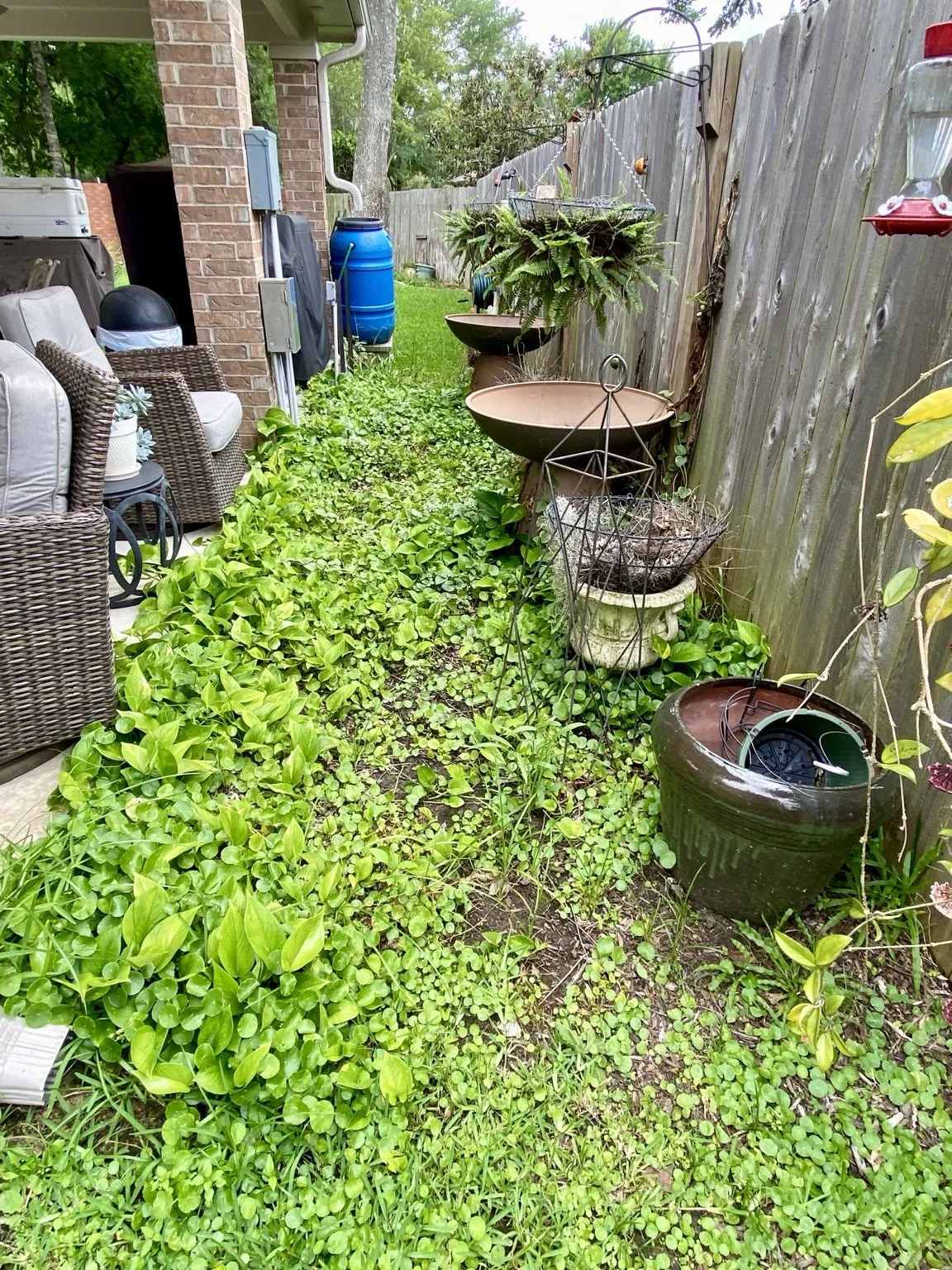
Almost every Houston-area home has one. That awkward, narrow strip between the patio and the fence. It's too shady for good grass, too wet after a hard rain, too tight for anything fancy — and somehow it becomes the spot where weeds, mud, old pots, hoses, birdbaths, and mystery vines all gather for a neighborhood meeting.
A backyard in Greatwood, Sugar Land had exactly that kind of space. The goal wasn't a high-maintenance showpiece. It was simple: clean it up, make it usable, make it look good year-round, and pick plants that can actually handle our Gulf Coast weather.
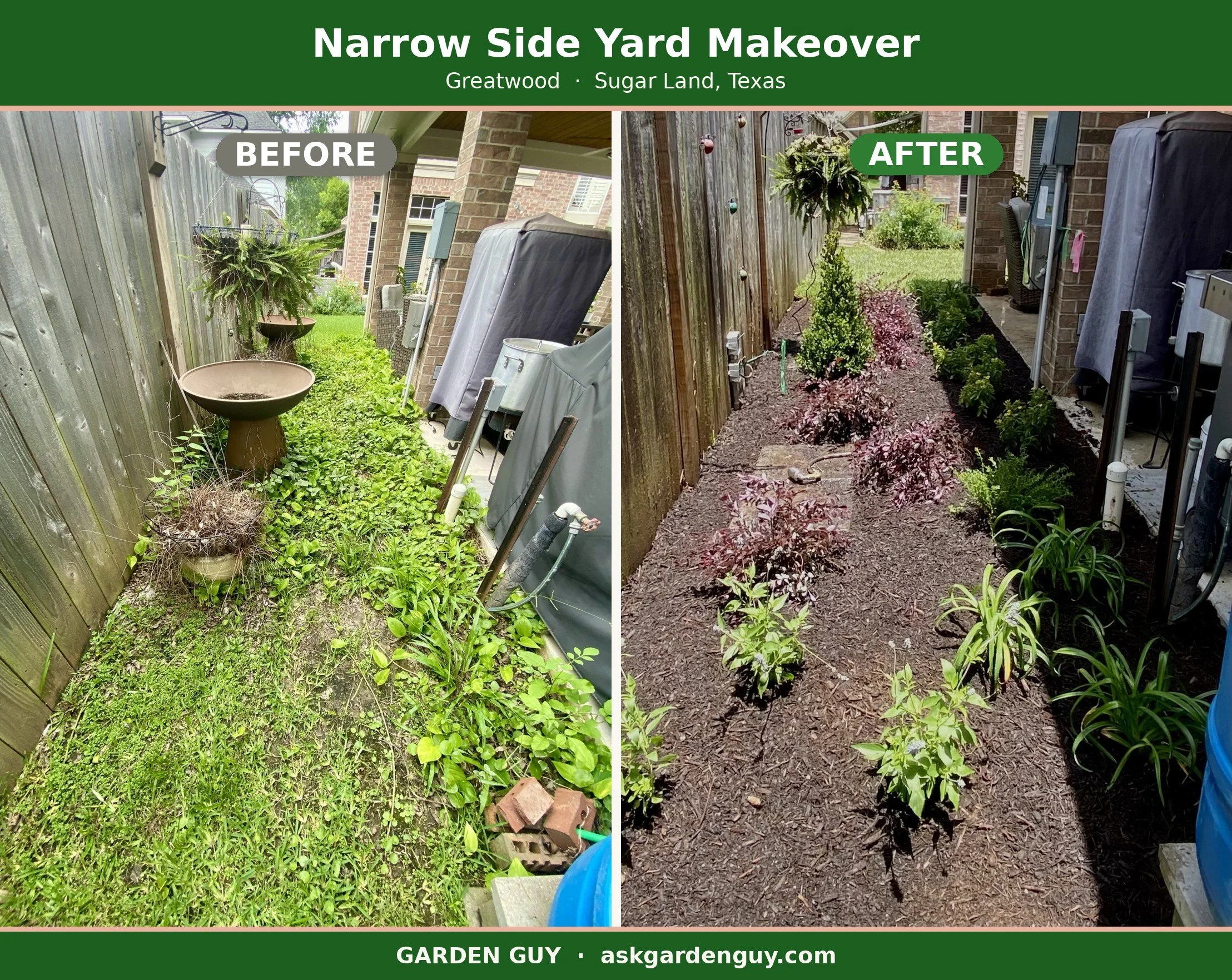
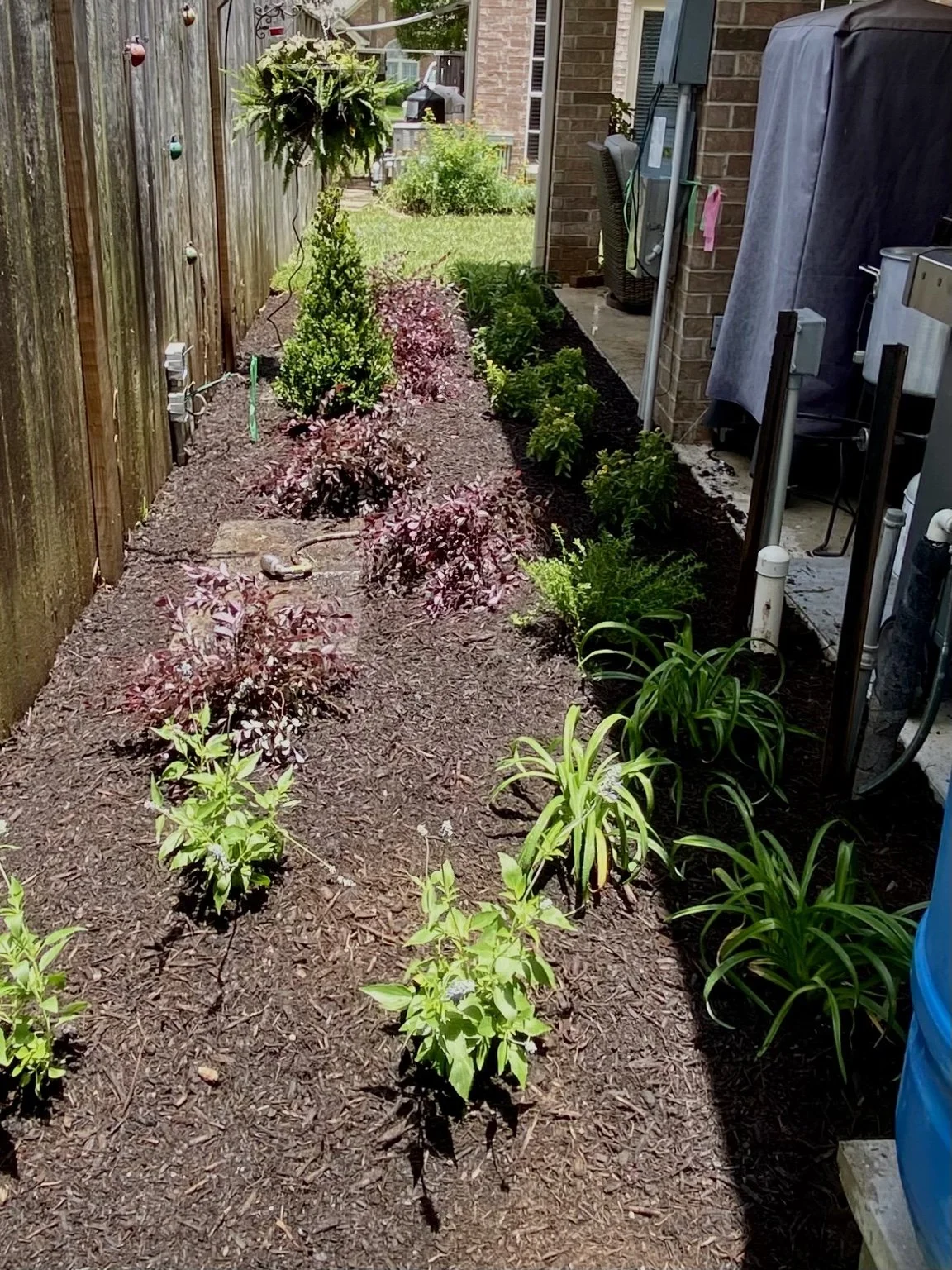
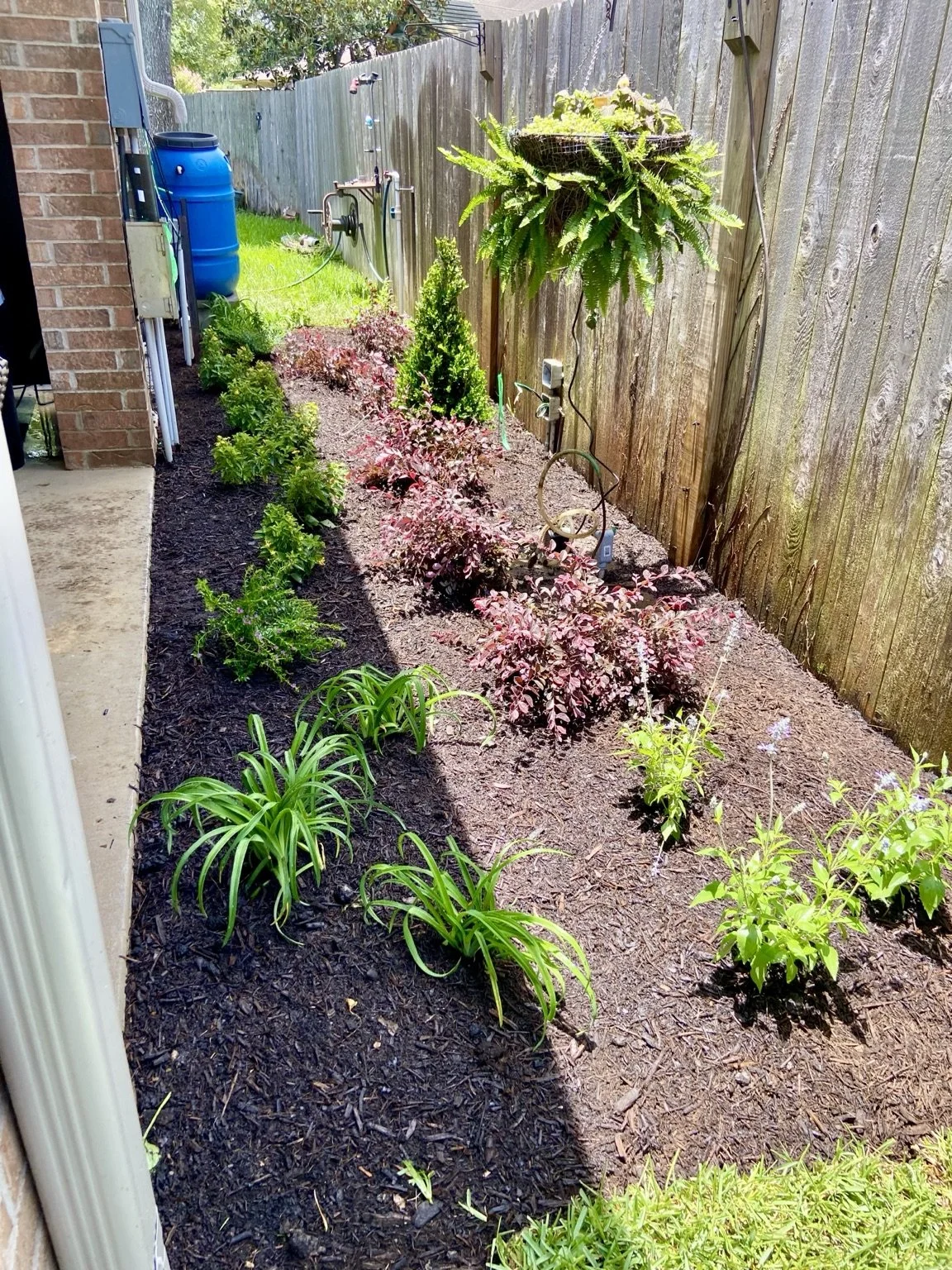
Before and after: a weedy Greatwood side yard transformed into a simple, low-maintenance Gulf Coast garden bed with dwarf loropetalum, pyramid boxwood, daylilies, and salvia. - This is Todd Farber, Garden Guy’s design and installation from June of 2026.
Why Narrow Side Yards Are So Tricky on the Gulf Coast
Narrow side yards and patio-side strips give Houston-area homeowners trouble because they usually have several problems happening at once.
- Low light. The house, the fence, and the patio cover all throw shade, so sun-loving grass thins out.
- Poor drainage. These strips hold water after heavy rain, and our heavy Gulf Coast soil doesn't drain it off quickly.
- Compacted, mucky soil. Foot traffic and standing water pack the soil down until almost nothing roots well.
- Weed pressure. Once grass gives up, weeds move in fast and take over.
That's why simply pulling the weeds and tossing down a bag of mulch never fixes it for long. The weeds come right back, because the underlying conditions never changed. For this Greatwood project, we treated it as a full reset instead.
Step One Was Cleanup
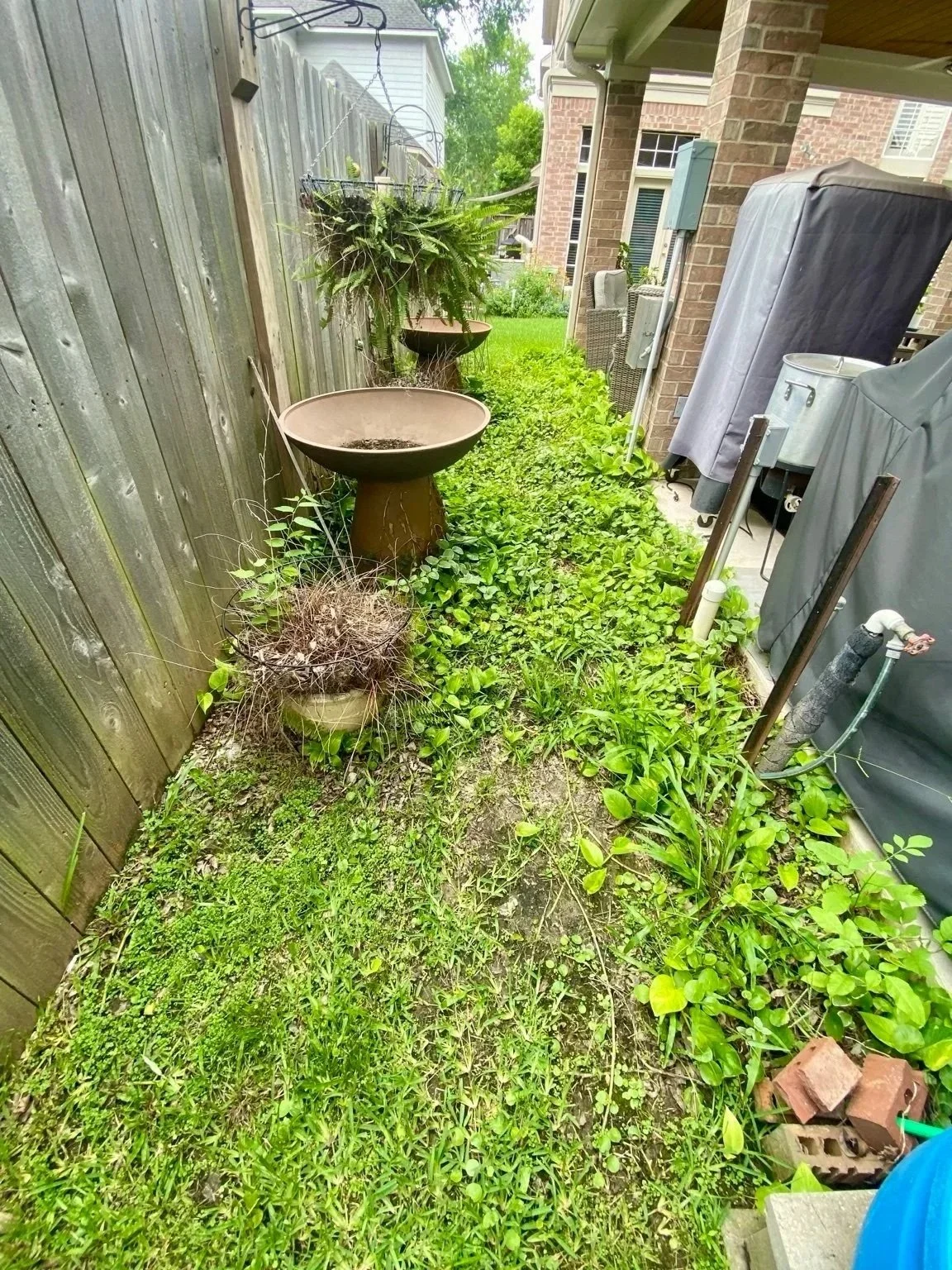
Before adding anything pretty, the space had to be cleared out. The existing weeds, vines, and debris were removed. Then we took off the top couple of inches of poor, mucky soil — so the new bed wasn't just fresh mulch sitting on top of old problems.
That step matters more than people think. In Sugar Land, Missouri City, Greatwood, Sienna, and much of the greater Houston area, heavy soil and poor drainage can sink a narrow bed before the plants ever get a fair chance.
Then We Rebuilt the Soil
After cleanup, the bed was amended with premium garden soil and a round of organic fertilizer to wake up the soil biology. That gave the new plants a real foundation to root into and created a cleaner, more intentional planting area.
In a narrow space, soil prep is especially important. There simply isn't much room for plants to spread out and outgrow bad conditions, so the soil has to carry them. A small worn grass strip beside the patio was also reset — tilled, topped with enriched topsoil, and re-sodded with fresh St. Augustine.
The Planting Design: Keep It Simple
The design needed to stay simple. In a narrow side yard, you don't want a dozen plant types competing for attention, and you don't want anything that quickly gets too big and turns the walkway into a jungle.
For this project, we used a small, intentional palette built around a few jobs:
- Year-round structure from evergreen foliage, so the bed never looks bare
- Burgundy foliage contrast for color that doesn't depend on bloom timing
- Soft flowering color that brings in pollinators all season
- Tough Gulf Coast perennials that shrug off our heat and humidity
- Low-growing plants at the patio edge to keep the front line tidy
- One vertical evergreen accent to give the eye a place to land
That mix makes the space feel finished right away while leaving room to fill in naturally over time. (Want to know exactly which six plants we used and how to care for each one? The full list is below.)
Why Mulch Matters Here
After planting, the bed was mulched with shredded hardwood mulch. Mulch makes the space look clean immediately, but it's doing real work too: it regulates soil temperature, holds down weed pressure, and protects the new plantings while they establish. In a side yard like this, it also visually ties the whole bed together so it reads as one intentional space instead of a pieced-together corner.
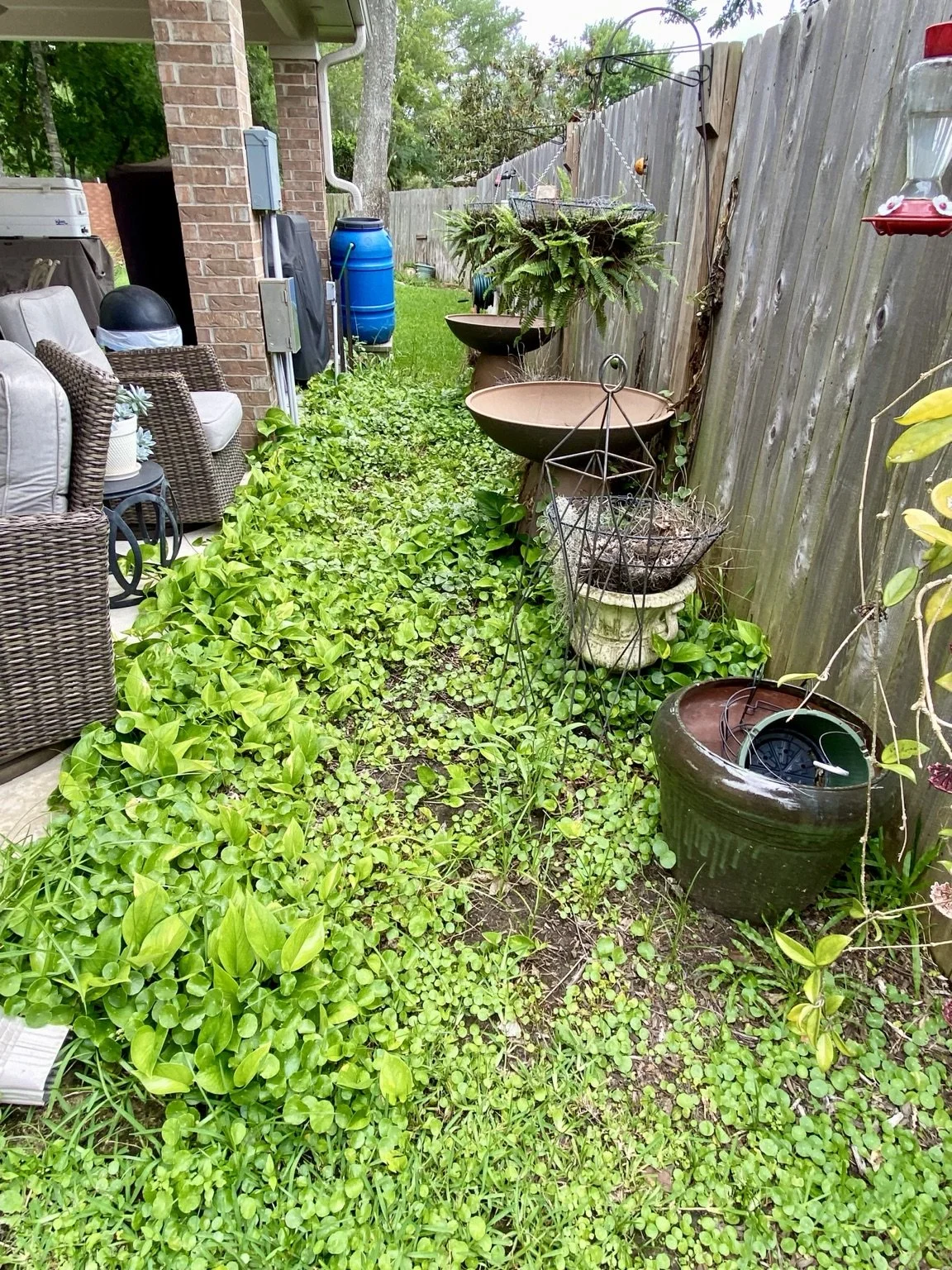
Weedy narrow side yard before landscaping with birdbaths and overgrown ground in Greatwood Sugar Land Texas
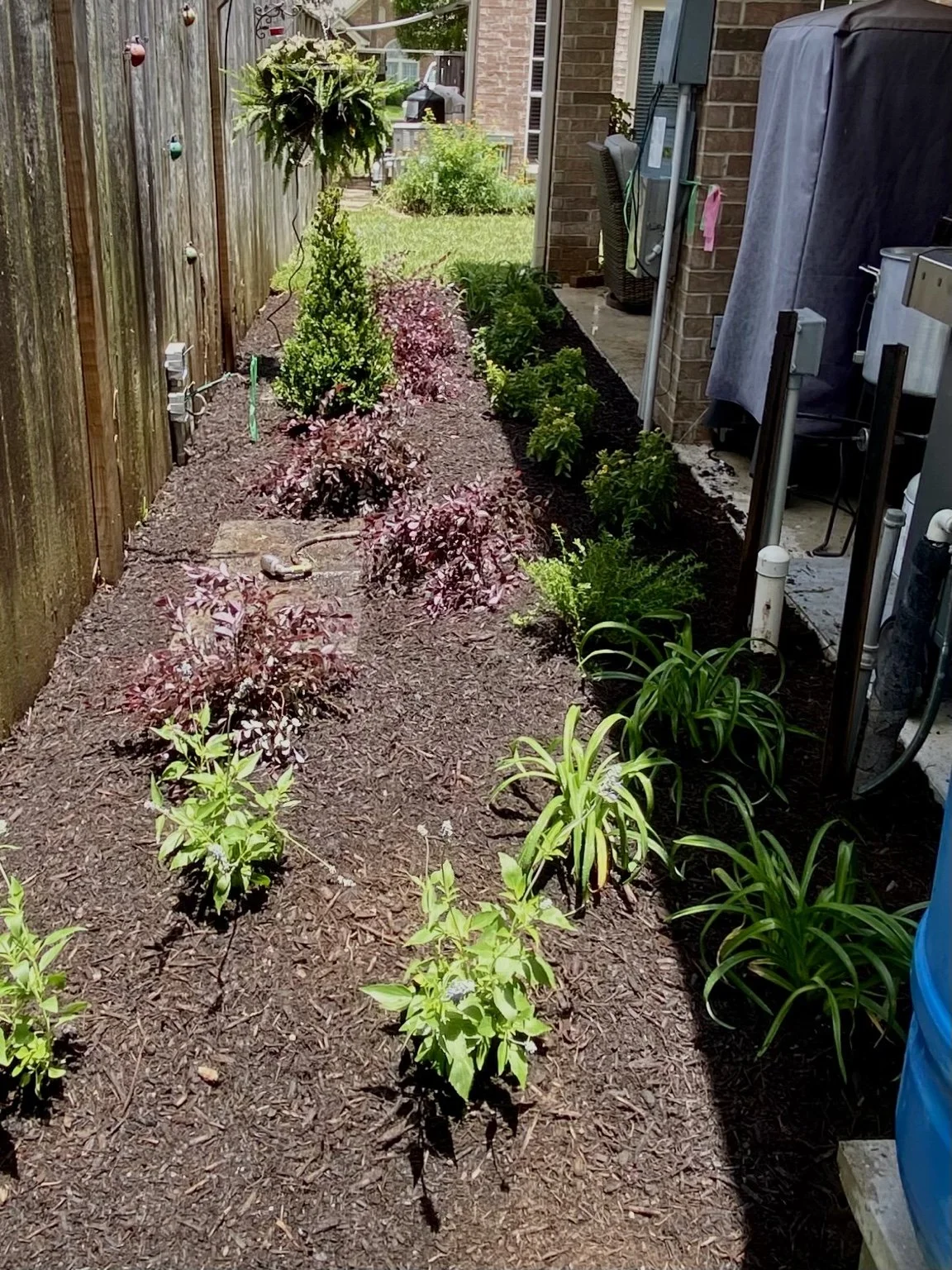
Low maintenance Gulf Coast landscape bed with loropetalum boxwood and daylilies beside patio in Greatwood Sugar Land
The Finished Look
The finished space is still simple, but now it has shape, color, structure, and a much cleaner view from the patio. Instead of a weedy side strip, it reads as a real backyard garden bed.
And that's the big lesson: a narrow side yard doesn't have to be wasted space. It just needs the right cleanup, the right soil prep, the right scale of plants, and a design that respects how the space is actually used. The grass and the plants are rarely the real problem — the foundation is.
Want the Full Plant List?
We put together a free PDF with the exact six plants from this Greatwood side yard makeover — what each one does in the design, the light and water it wants, and Todd's planting and care notes for our Gulf Coast climate.
Enter your email and we'll send the plant list straight to your inbox:
Narrow Side Yard Landscaping FAQs
What can I plant in a narrow, shady side yard in Houston?
Lean on tough, shade-tolerant plants that stay in scale. In this Sugar Land bed we used dwarf loropetalum for burgundy foliage, a pyramid boxwood for an evergreen vertical accent, daylilies and salvia for color, New Gold lantana for nonstop blooms, and Mexican heather as a low edger. The key is a small palette of plants that won't outgrow the space.
Why does grass keep dying in my side yard?
Usually it's a combination of too little light, poor drainage, and compacted soil — not the grass variety. A patio cover and a fence throw a lot of shade, and water sits in these strips after rain. Often the better move is to convert a struggling side strip into a mulched planting bed rather than fighting to keep grass alive there.
Do I really need to remove the old soil before planting?
In a wet, shady strip, yes. The top couple of inches of mucky, compacted soil works against new plants. Removing it and amending with fresh garden soil gives roots something to actually grow into, instead of burying the old problem under new mulch.
How much sun do these plants need?
This palette is built for sun-to-part-shade, which is typical for a fenced side yard. Put the lantana and salvia where the bed gets the most light, and the loropetalum, boxwood, daylilies, and Mexican heather will all handle the shadier stretches.
Is a narrow side yard landscape really low maintenance?
Once it's established, yes. The work is mostly up front — cleanup, soil prep, and mulch. After that you're looking at a light trim a couple times a year, occasional deadheading on the bloomers, and topping off mulch annually. A small palette of tough Gulf Coast plants keeps the ongoing effort low.
What grows along a fence line on the Gulf Coast?
Burgundy dwarf loropetalum is a standout along a fence because it gives color year-round and takes part shade. Pair it with an upright evergreen like boxwood for structure and a few perennials like salvia and daylilies, then mulch heavily to suppress weeds creeping in from the fence side.
Garden Guy designs and advises on landscapes in Sugar Land, Greatwood, Missouri City, Sienna, Richmond, First Colony, Katy, Pearland, Friendswood, and nearby Houston-area communities. For free Gulf Coast lawn and garden help, visit askgardenguy.com. Want to talk through your own side yard? Book a private call: bit.ly/callwithgardenguy.
