Will Sod Take on Hard Dirt? How to Prep Soil Before Laying Sod in Houston
Summer School · Lawn Class Is In Session
Will This Sod Take? Why You Can't Just Throw Sod on Dirt
Okay, class — I know you didn't sign up for summer school. You were promised iced tea and shade. But pull up your seat and sharpen your pencil, because this one little strip of grass in our neighborhood is about to teach the whole class a lesson about sod, soil, and why so many Houston lawns fail before they ever get a chance.
I snapped this photo one morning here in the Sugar Land area — a fresh piece of sod laid right along a sidewalk. Looks like St. Augustine, our workhorse grass here on the Gulf Coast. And to a lot of folks, it looks done. Grass is down, job's finished, crack open a cold one.
But here's the pop quiz I put to our almost-30,000 followers. Since you've been following along a while, you tell me:
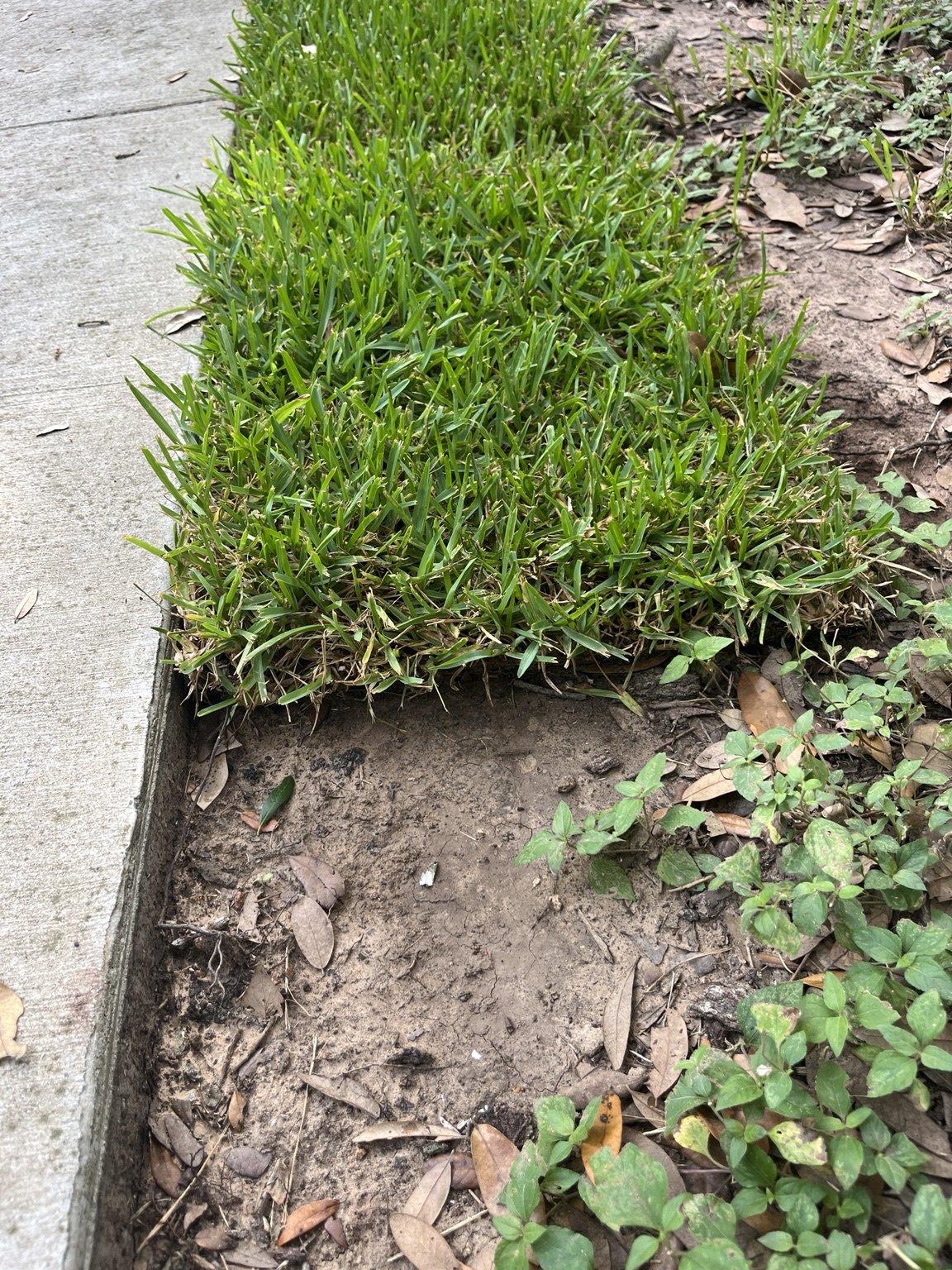
Throwing down sod in Houston and Texas onto unprepped soil will always equal failure.
Will this sod take? Will it root?
- A. Yes, absolutely. Roots love being tossed on hard dirt like a decorative throw blanket.
- B. Absolutely not. That sod is sitting there reconsidering all its life choices.
- C. Only after a handwritten apology, a soil-prep intervention, and three weeks of emotional support.
- D. Sure — right after my porch goose earns a horticulture degree and opens a turf consulting firm.
Pencils down. The honest answer is B (with a little C sprinkled in). That sod, laid the way it is here, is fighting an uphill battle — and most of the time on our hard Gulf Coast clay, it loses.
That's not sod installation.
That's grass decorating.
Why Sod Won't Root on Hard, Unprepped Soil
Sod is essentially a live plant with its roots cut short. For it to survive, those roots have to grow down and out into the soil below within a couple of weeks — before the sod dries out and starves. That only happens when the roots make firm, moist contact with loose soil they can actually push into.
When you lay sod on hard, dry, compacted dirt, three things go wrong fast:
1. No soil contact. Hard ground and dry clumps leave tiny air pockets under the sod. Roots can't grip air. Where there's a gap, that patch browns out and dies.
2. The clay wicks the moisture away. Fresh sod is thirsty. Compacted clay underneath either sheds water sideways or pulls it out of the sod like a sponge, leaving the roots high and dry right when they need moisture most.
3. Roots hit a wall. Even if the top greens up for a week or two, roots can't penetrate rock-hard, un-loosened clay. You end up with sod that peels up like a rug months later because it never actually anchored.
The Real Culprit: Gulf Coast Clay (Not the Grass)
This is the part I want tattooed on every wheelbarrow in Houston: when a lawn fails, the grass usually isn't the problem — the foundation is.
Our native soil around here is heavy gumbo clay. It's sticky when wet, it sets up like concrete when dry, and years of foot traffic, mower weight, and construction leave it compacted and lifeless. Look closely at that bare strip in the photo — see the cracking and the tired, packed-down surface? That's the exact ground someone laid live grass on and expected miracles.
People swap grass varieties, buy fancier sod, sprinkle on fertilizer — chasing the wrong problem. Nine times out of ten, the fix isn't a different grass. It's fixing the dirt underneath before a single piece of sod goes down.
How to Prep Soil Before Laying Sod (Step by Step)
Here's the homework, and it's the difference between a lawn that takes the first time and one you're re-doing next spring. Never lay sod by just throwing it down on top of hard, dry soil and calling it landscaping. Do this instead:
- Clear the ground. Remove old grass, weeds, rocks, roots, and leaf debris so the sod meets clean soil — not a salad of leftovers.
- Loosen it deep. Till or break up the existing soil 4 to 6 inches down. This is the single most-skipped step, and it's the one that lets roots actually travel.
- Amend the clay. Work in enriched topsoil or quality compost. On our compacted Gulf Coast clay this is non-negotiable — it gives the roots something soft, alive, and moisture-holding to grab.
- Grade it smooth. Rake level and slope gently away from the house and hardscape so water drains instead of puddling or running off.
- Pre-water the soil. Dampen the prepped bed before laying sod so the roots meet moist ground on contact — not thirsty dust.
- Lay sod tight, seams staggered. Butt the pieces snugly together and offset the seams like bricklaying, so there are no gaps for edges to dry out.
- Press it into contact. Roll the sod or tamp it down so the roots make firm, gap-free contact with the soil underneath. This step wins games.
- Water deep and consistent. Then keep it moist while it roots (see the schedule below).
Get the Pro Soil-Prep Steps
The exact 8-step checklist Garden Guy uses so your sod actually roots the first time — plus the first-3-weeks watering window. Prints clean and fits your phone.
- All 8 prep steps on one printable sheet
- The Gulf Coast new-sod watering schedule
- Todd’s golden rule: fix the foundation first
You Sod
Watering New Sod: The First 3 Weeks Make or Break It
Prep gets the sod a fair shot. Water gets it rooted. In our Houston heat, new sod dries out fast, so consistency matters more than volume. A rough Gulf Coast guide:
Water early in the morning when you can, and try to keep foot traffic and pets off it while it's establishing.
Common Sod Mistakes We See Around Sugar Land
Laying sod straight onto hard dirt. The headliner. No prep, no contact, no chance.
Skipping the till. Raking the surface isn't loosening the soil. Roots need 4–6 inches of workable ground.
Letting it dry out on day two. Miss a watering during that first hot week and the edges curl and brown before roots ever form.
Gaps between pieces. Every seam that isn't snug is a dry edge waiting to die back.
Blaming the grass. If St. Augustine keeps failing in a spot, the answer usually isn't a different variety — it's the compacted foundation underneath.
Frequently Asked Questions
Can I just lay sod on top of my existing lawn or bare dirt?
Not if you want it to last. Sod needs firm contact with loose, amended soil to root. Laid over old grass or hard, un-tilled dirt, it may green up briefly and then die back once the roots hit a wall. Prep first, every time.
How long does new sod take to root in Houston?
With proper prep and consistent watering, most sod begins anchoring in about 2 weeks and roots in well over 3–4 weeks. You'll know it's taking when a gentle tug on a corner meets resistance.
Do I really need to till before laying sod on clay?
On our Gulf Coast gumbo clay, yes. Loosening 4–6 inches and working in compost or enriched topsoil is what lets roots penetrate. Skip it and you're decorating, not installing.
What kind of grass is best for a Houston lawn?
St. Augustine is the Gulf Coast standard for its shade tolerance and lushness, with Zoysia a strong option too. But remember — the best grass in bad soil still fails. Fix the foundation first, then choose the grass.
Why does my sod keep dying in the same spot?
Usually a soil problem, not a grass problem: compacted clay that was never loosened or amended, or a low spot that stays soggy or bakes dry. The fix is almost always scrape, loosen, amend, re-grade — then resod.
Not Sure If Your Soil Is Sod-Ready?
Send us a photo, or book a call and we'll walk through your yard together — from soil prep to the right grass for your spot. 35 years of Gulf Coast lawns behind every answer.
Book a Call with Garden Guy Visit askgardenguy.comFound this helpful? A little tip keeps the summer school lights on — it's worth a cup or two of coffee ☕
Grass is not a rug. Grass is not a placemat. Grass is not outdoor carpet with dreams. Prep the soil first — then lay the sod. 🌱
— Todd & Sabrina, Garden Guy Inc. · 281-208-4400
