Sod Webworms in Houston St. Augustine Lawns: How to Find, Treat, and Repair the Damage
Houston Lawn Update — June 20, 2026
Sod webworms are starting to show up again in Houston St. Augustine lawns, and Garden Guy is already getting questions about them.
This matters because sod webworms can move fast.
One Houston-area homeowner recently told Ask Garden Guy that sod webworms had “about eaten” her yard and the neighbor’s yard several years ago. After the grass was damaged, weeds moved into the bare spots.
That is the part most lawn advice skips.
Sod webworms are not just a “spray and forget” problem.
First, you have to confirm what is actually happening.
Then you treat correctly.
Then you repair the damaged lawn so bare spots do not become a weed hotel.
Let’s walk through it.
What Are Sod Webworms?
Sod webworms are lawn-damaging caterpillars.
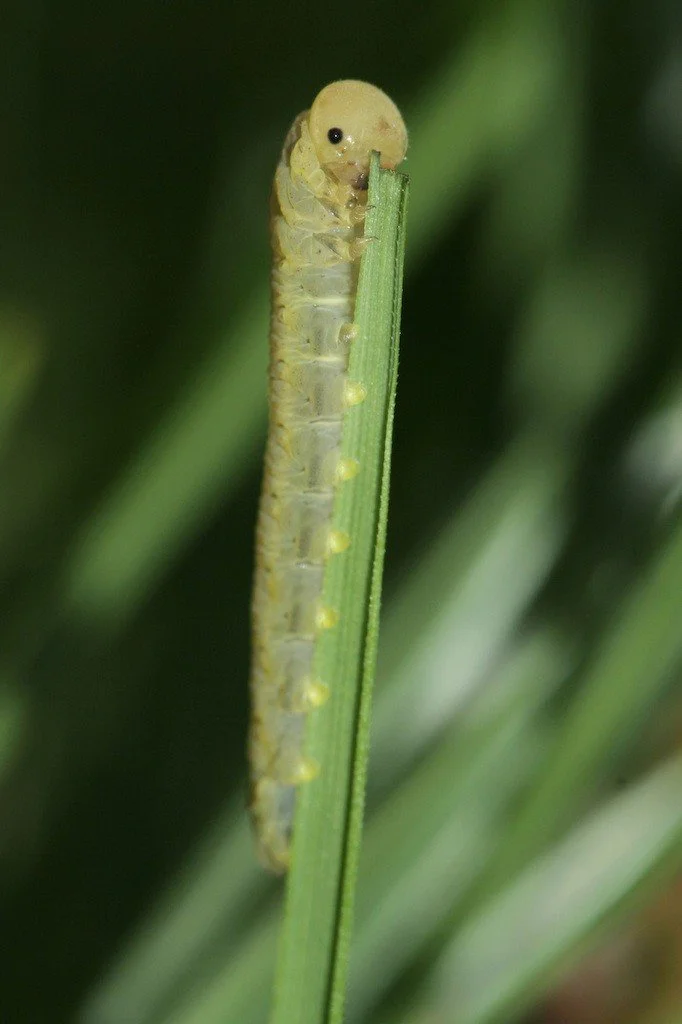
Sod webworm caterpillar in St. Augustine grass
The little moths you may see flying low over your lawn are the adult stage. The moths are a warning sign, but they are not what actually chew up the grass.
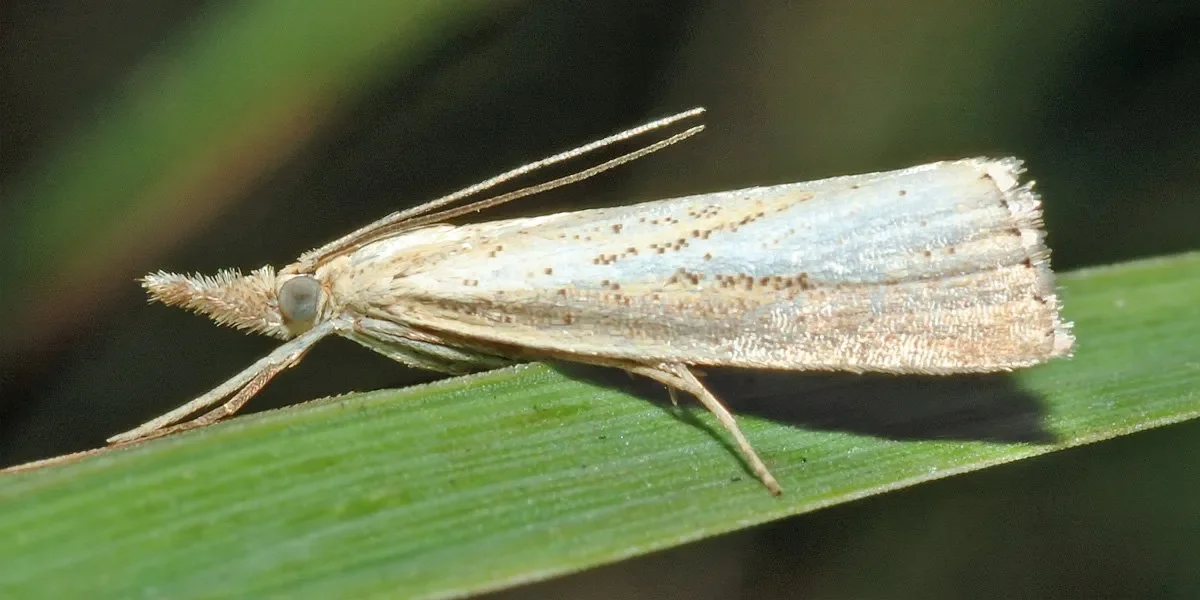
Sod webworm moth.
The damage comes from the larvae.
Garden Guy rule:
The moths are the warning light.
The worms are the engine problem.
If you see tiny moths fluttering over the lawn, especially near areas of thinning or damaged St. Augustine, do not panic. But do inspect.
Why Houston St. Augustine Lawns Can Get Sod Webworms
Houston gives sod webworms plenty to enjoy:
Hot weather.
Humidity.
Thick St. Augustine.
Thatch.
Stressed lawns.
Rain followed by heat.
Overwatered areas.
Overfertilized areas.
Lawns that are already struggling.
Sod webworm damage can appear quickly and may look like the grass was clipped too short, chewed down, scalped, or browned in patches.
Signs of Sod Webworm Damage in St. Augustine
Look for these symptoms:
✓ Ragged grass blades
✓ Chewed or notched leaf tips
✓ Grass that looks unevenly clipped
✓ Brown or scalped-looking patches
✓ Tiny caterpillars in the thatch
✓ Small green or brown pellets, called frass
✓ Fine webbing or silken tunnels near the soil surface
✓ Damage that seems to spread quickly
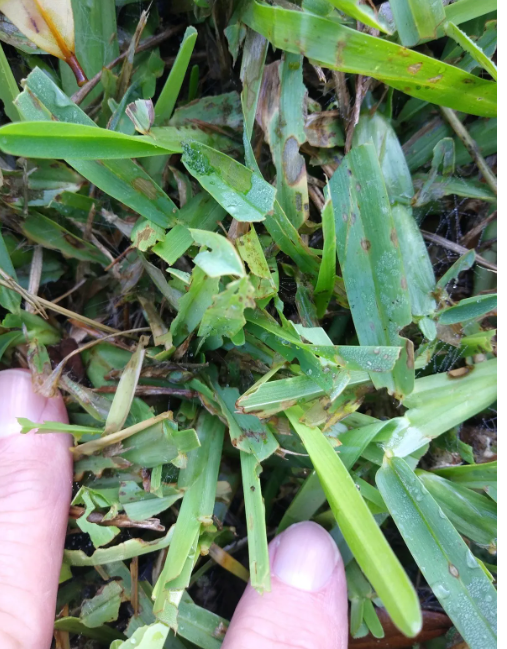
Sod Webworm Damage with chewing evident
The best place to inspect is usually not the completely dead center of the damaged area.
Check the edge where healthy grass meets damaged grass. That is often where the active feeding is happening.
Are the Lawn Moths Sod Webworms?
Maybe.
Small moths fluttering low over the lawn can be a clue, but moths alone are not a diagnosis.
You need to look for larvae or fresh chewing damage.
The moths are the adult stage. The caterpillars are the stage that damages your lawn.
So if you see moths, inspect the grass.
If you see chewed blades, inspect harder.
If you find active larvae, then you treat.
How to Check for Sod Webworms
Here is a simple homeowner inspection process.
1. Look closely at the grass blades
Part the grass and look down into the thatch layer.
You are looking for:
✓ Chewed blades
✓ Tiny caterpillars
✓ Small pellets/frass
✓ Webbing
✓ Active feeding at the edge of the damaged patch
2. Check at the edge of the damage
The edge between good grass and bad grass is usually more helpful than the dead center of a brown patch.
The dead center may already be abandoned.
3. Try a soap flush test
A soap flush can help bring sod webworm larvae to the surface.
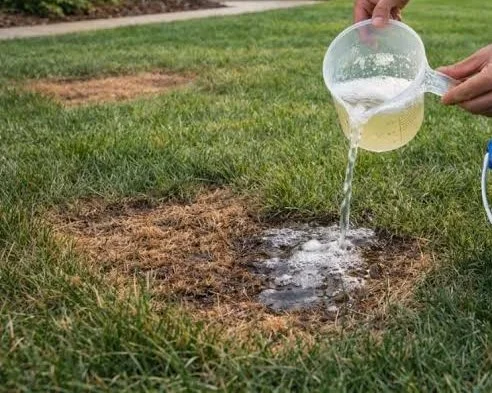
Soap test for sod webworms in Houston
Mix a small amount of liquid dish soap into water and pour it over a small test area near the edge of the damage. Watch for several minutes. If caterpillars are present, they may come up to the surface.
This is not glamorous.
This is lawn detective work.
Welcome to Houston.
Sod Webworms vs. Brown Patch in St. Augustine
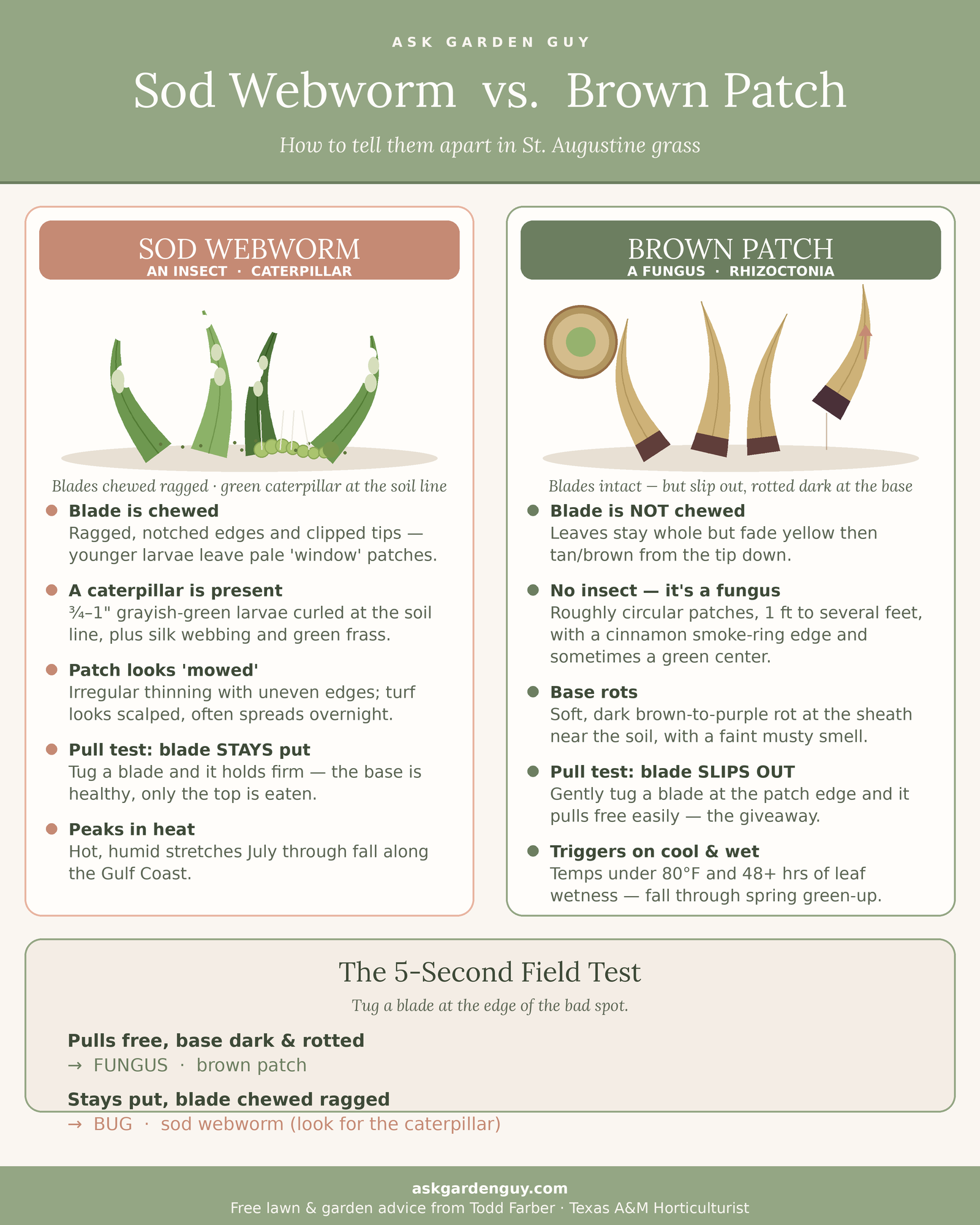
Sod webworm vs. brown patch comparison chart for St. Augustine grass lawns in Houston, showing chewed blades and a caterpillar versus circular brown patch fungus with rotted blade bases. Sod webworms chew St. Augustine grass blades. Brown patch is fungal and often causes blades to pull loose from rotted leaf sheaths. Diagnosis matters before treatment.
This is where homeowners get confused.
Both sod webworms and brown patch can make St. Augustine look brown, patchy, and terrible.
But they are not the same problem.
Sod webworms are chewing insects.
Brown patch, also called large patch, is a fungal disease.
Garden Guy distinction:
If the grass blades are chewed, think caterpillar.
If the blades pull loose from a rotted sheath, think fungus.
With sod webworms, you are looking for chewing damage.
With brown patch, the lower part of the grass blade may rot where it attaches to the runner. Yellowing blades may pull loose easily.
That is a fungus clue, not a caterpillar clue.
And because Houston lawns enjoy being dramatic, yes, a lawn can have more than one problem at the same time.
A stressed St. Augustine lawn can be dealing with insects, fungus, poor drainage, bad watering, mowing stress, and weak soil all at once.
That is why diagnosis matters.
Should You Treat Sod Webworms Every Year?
Not automatically.
If you have had sod webworms before, you should absolutely watch for them during the hot Houston lawn season, especially summer into early fall.
But Garden Guy does not recommend panic-spraying every year just because you are scared.
That is not lawn care.
That is emotional support spraying.
Inspect first.
Confirm the issue.
Then treat.
Best Sod Webworm Treatment Options for Homeowners
Always read the current product label before buying or applying anything.
The label is the law.
Here are three Amazon-available homeowner lawn insecticide options to consider when sod webworms or lawn caterpillars are confirmed.
1. BioAdvanced Complete Brand Insect Killer for Soil & Turf
Amazon link:
https://amzn.to/3QqCQ9n
This is a lawn insecticide option for listed turf insects.
Use this type of product when you have confirmed or strongly suspect active lawn insects such as sod webworms, armyworms, cutworms, chinch bugs, or other listed turf pests.
Do not use it just because the lawn looks brown.
Brown can mean many different things in a Houston St. Augustine lawn.
2. Ortho BugClear Insect Killer for Lawns & Landscapes
Amazon link:
https://amzn.to/3QtXvtc
This is another common homeowner lawn and landscape insecticide option.
It is an insect-control product, so it fits the conversation when you are seeing chewing damage, moth activity plus larvae, or other signs of listed lawn insects.
Again, read the product label.
Do not guess.
Do not overapply.
Do not spray before rain.
3. Spectracide Triazicide Insect Killer for Lawns & Landscapes
Amazon link:
https://amzn.to/3QBscg3
This is another lawn insecticide option for listed outdoor insects, including many common turf pests.
Use it only according to the label and only when the problem fits.
This is not a brown patch treatment.
This is not a “my lawn looks sad” treatment.
This is an insect-control option.
Important Sod Webworm Treatment Notes
Before applying any lawn insecticide:
✓ Read the label before you buy
✓ Read the label again before you spray
✓ Apply only at the labeled rate
✓ Keep children and pets off the lawn until the label says it is safe
✓ Do not apply before heavy rain
✓ Do not apply when product may run off
✓ Do not let it wash into streets, storm drains, ditches, creeks, ponds, pools, or bayous
✓ Avoid spraying blooming weeds or plants where pollinators are active
✓ Do not mix products unless the label allows it
✓ Do not treat a stressed lawn like it owes you money
Evening application is often a better fit for sod webworm activity because they feed at night.
What About Organic Sod Webworm Treatment?
If you are trying to stay organic and you confirm small, actively feeding caterpillars, BT products may help.
BT stands for Bacillus thuringiensis.
BT works best when caterpillars are small and actively eating treated foliage. It is not the same as a fast knockdown broad-spectrum insecticide.
For a heavy infestation where the lawn is actively being eaten, many homeowners choose a labeled turf insecticide.
After the Sod Webworms Are Gone
This is the part almost nobody talks about.
The treatment may stop the chewing, but it does not magically rebuild the lawn.
After treatment, you still have to evaluate the grass.
Step 1: Recheck the Lawn
Inspect the damaged area again several days after treatment.
Look along the edges.
Check for fresh chewing.
Use a soap flush again if needed.
You want to make sure the larvae are gone before you start deciding what the lawn needs next.
Step 2: Rake Out Dead Material
Remove matted, dead, chewed grass.
Do not leave a wet thatch blanket sitting over the soil.
That only makes recovery harder.
Step 3: Check the St. Augustine Runners
St. Augustine spreads by runners, also called stolons.
If the runners are still alive, firm, and green at the nodes, the lawn may recover with correct watering, mowing, and time.
If the runners are dead, crispy, loose, and detached, that area may not come back.
Step 4: Do Not Panic-Fertilize
A chewed-up, stressed lawn does not need someone dumping high-nitrogen fertilizer on it in the heat.
That can make other problems worse.
The lawn needs correct watering, oxygen, sunlight, healthy runners, and time.
Not a fertilizer tantrum.
Step 5: Deal With Weeds in Bare Spots
Bare spots invite weeds.
That is exactly what happened in the Ask Garden Guy question that prompted this article.
The sod webworms damaged the lawn, the grass thinned out, and weeds moved into the open space.
If weeds have taken over the dead areas, the long-term fix may not be “spray more stuff.”
Sometimes the correct answer is to clean out the damaged area and re-sod correctly.
How to Re-Sod After Sod Webworm Damage
Garden Guy is very firm on this:
We do not lay sod on hard, bare, compacted dirt and call that a lawn installation.
That is green carpet with commitment issues.
If sod webworms destroyed sections of the lawn and the area is truly dead, the correct repair process is:
✓ Scrape out dead grass
✓ Remove weeds and debris
✓ Loosen compacted soil
✓ Lay down enriched topsoil
✓ Grade and level properly
✓ Lay fresh St. Augustine sod tightly
✓ Lay seams tight
✓ Press sod for good soil contact
✓ Water correctly while it roots
✓ Taper watering as the sod establishes
Sod needs soil contact.
It needs oxygen.
It needs water.
It needs preparation.
It does not need to be thrown on top of concrete-hard Houston clay and abandoned in July.
Frequently Asked Questions About Sod Webworms in Houston
What do sod webworms look like?
Sod webworms are small caterpillars. They may be light brown, grayish, or greenish depending on age and species. The moths are small and often fly low over the lawn.
Do sod webworm moths damage the lawn?
No. The moths do not chew the lawn. The larvae/caterpillars do the damage.
What does sod webworm damage look like?
It can look like ragged, chewed, clipped, scalped, thinning, or brown St. Augustine grass.
Can sod webworms kill St. Augustine?
They can severely damage it. If the runners remain alive, St. Augustine may recover. If the runners die or weeds take over the bare areas, re-sodding may be needed.
Is brown patch the same as sod webworms?
No. Brown patch is fungal. Sod webworms are insects. Chewed grass points toward caterpillars. Grass blades pulling loose from rotted sheaths points toward fungus.
Should I treat sod webworms every year?
Not automatically. Watch for them if you have a history, but treat only when you confirm active larvae or fresh damage.
What is the best time to treat sod webworms?
Evening is often a better fit because sod webworms feed at night. Always follow the product label.
What should I do after treating sod webworms?
Recheck the lawn, rake out dead material, inspect the runners, avoid panic-fertilizing, manage weeds, and re-sod correctly if the grass is truly dead.
Garden Guy Bottom Line
Sod webworms are not mysterious once you know what to look for.
Remember:
✓ Moths are a clue, not the diagnosis.
✓ Larvae are what damage the lawn.
✓ Chewed blades point toward caterpillars.
✓ Rotted leaf sheaths point toward fungus.
✓ Treat only when needed.
✓ Use a labeled product.
✓ Read and follow the label.
✓ Recheck after treatment.
✓ Repair the lawn correctly afterward.
Diagnosis first.
Treatment second.
Recovery plan third.
That is how you keep one Houston lawn problem from turning into five.
Need help with a Houston St. Augustine lawn problem? I’m Todd Farber, Aggie Horticulturist and expert Houston landscaper. I am happy to help you with my link below.
Ask Garden Guy here:
https://www.askgardenguy.com
